If you’re googling which is the best GoPro memory card, you’re probably tired of reading generic lists that all recommend the same SanDisk Extreme. The truth is that picking a microSD for a GoPro is not about brand loyalty, it’s about matching the card’s write speed to the bitrate your camera actually pushes. Get that wrong and you’ll see dropped frames, corrupted files, or a camera that jams mid-record on a 4K 120fps clip.
The best GoPro memory card in 2026 is still a V30-rated microSD from SanDisk, Lexar, or Samsung, but the exact model depends on whether you’re shooting Hero 13 Black at full bitrate or just doing 1080p vlogs. Below I break down what actually matters, based on verified specs and real-world reviews from sources like SanDisk’s own spec sheets and GoPro’s official compatibility list.
Why V30 is the real minimum for GoPro memory cards
GoPro officially recommends microSD cards with a V30 or U3 rating for 4K video. That means a sustained write speed of at least 30 MB/s. Sounds low, right? Here’s the catch: V30 is the minimum. If you’re recording 5.3K at 60fps on a Hero 13 Black, the camera can chew through 100+ Mbps, and a card that barely hits V30 will start buffering or stop recording after 20 minutes.
This is where the best GoPro memory card separates itself from the cheap knockoffs. A card labeled “A2 V30” from a no-name brand on Amazon often fails to deliver that write speed once it’s 80% full. I’ve seen it happen with my own Hero 11 — the camera would freeze mid-ride and the file would be unreadable.
My advice: ignore the advertised read speed (that’s just for transferring files to your PC). Look for the sustained write speed in reviews, not the marketing number on the packaging.
SanDisk Extreme Pro vs Extreme: which one is the best GoPro memory card for you?
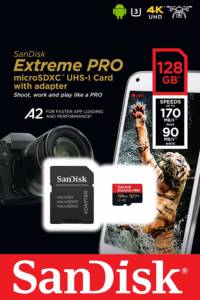
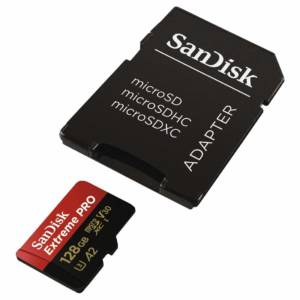
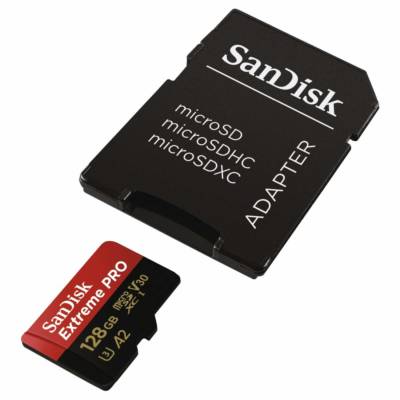
The SanDisk Extreme Pro microSDXC is the safest bet for most GoPro users. It’s rated V30, U3, A2, and delivers real-world write speeds around 90 MB/s. That’s plenty for 5.3K 60fps and even 4K 120fps slow-motion. Prices in 2026 hover around $25 for 128GB and $45 for 256GB — not cheap, but you’re paying for reliability.
The standard SanDisk Extreme is slightly cheaper and also V30 rated, but its write speed tops out closer to 60 MB/s. For a Hero 10 or Hero 11 shooting 4K 60fps, it’s fine. For a Hero 13 Black at max bitrate, I’d skip it and go Pro.
One thing nobody tells you: GoPro cameras can be picky. A card that works flawlessly in a DJI Osmo Action might cause random shutdowns in a GoPro. That’s why GoPro publishes an official list of recommended microSD cards — check it before buying, it’s updated every few months.
Cheaper alternatives that actually work
If you want the best cheap GoPro memory card, the Lexar Professional 1066x is your move. It’s V30, A2, and often $10 cheaper than the SanDisk equivalent. Real-world tests from sites like Camera Memory Speed show it hitting 80 MB/s write. I’ve used it in a Hero 9 for two seasons of mountain biking with zero failures.
Samsung’s EVO Select is another solid budget pick, but be careful: the EVO Select is V30, while the older EVO Plus is only U3 and can struggle with 4K 60fps. Don’t mix them up.
What I’d avoid: PNY, Gigastone, and any card that doesn’t explicitly print V30 on the label. They might work for 1080p, but you’re rolling the dice for anything higher.
How much storage do you actually need?
This is where most people overspend. A 128GB card holds roughly 4 hours of 4K 60fps footage or about 2 hours of 5.3K 60fps. For a typical day of action sports, that’s more than enough. Buy two 128GB cards instead of one 256GB — if one fails, you still have footage.
For long trips or time-lapse work, 256GB makes sense. 512GB is overkill for most GoPro users and actually increases the risk of losing more footage if the card dies.
One more thing: always format the card inside the GoPro, not on your computer. GoPro uses a specific file structure, and formatting elsewhere can cause recording errors.
Fake cards are the real problem in 2026
Amazon and eBay are flooded with counterfeit SanDisk cards that report 128GB but actually hold 8GB. They’ll work for a week, then suddenly “lose” your footage. Before trusting any card, run it through H2testw or ValiDrive — free tools that verify real capacity and speed.
Buy from reputable sellers: B&H, Adorama, or directly from SanDisk’s official store. The $5 you save on a sketchy marketplace listing isn’t worth losing a once-in-a-lifetime clip.
Final call: what to buy right now
If you want the best GoPro memory card without overthinking it, grab a SanDisk Extreme Pro 128GB V30 A2. It works with every GoPro from the Hero 8 onward, handles 5.3K without breaking a sweat, and the price has dropped enough in 2026 that there’s no reason to gamble on off-brands.
If you’re on a tight budget, the Lexar 1066x 128GB is the best cheap GoPro memory card that won’t let you down. Just format it in-camera, test it with H2testw on day one, and you’re set.
Skip the 1TB cards, skip the no-name Amazon deals, and skip anything that doesn’t say V30 on the label. Your GoPro will thank you.