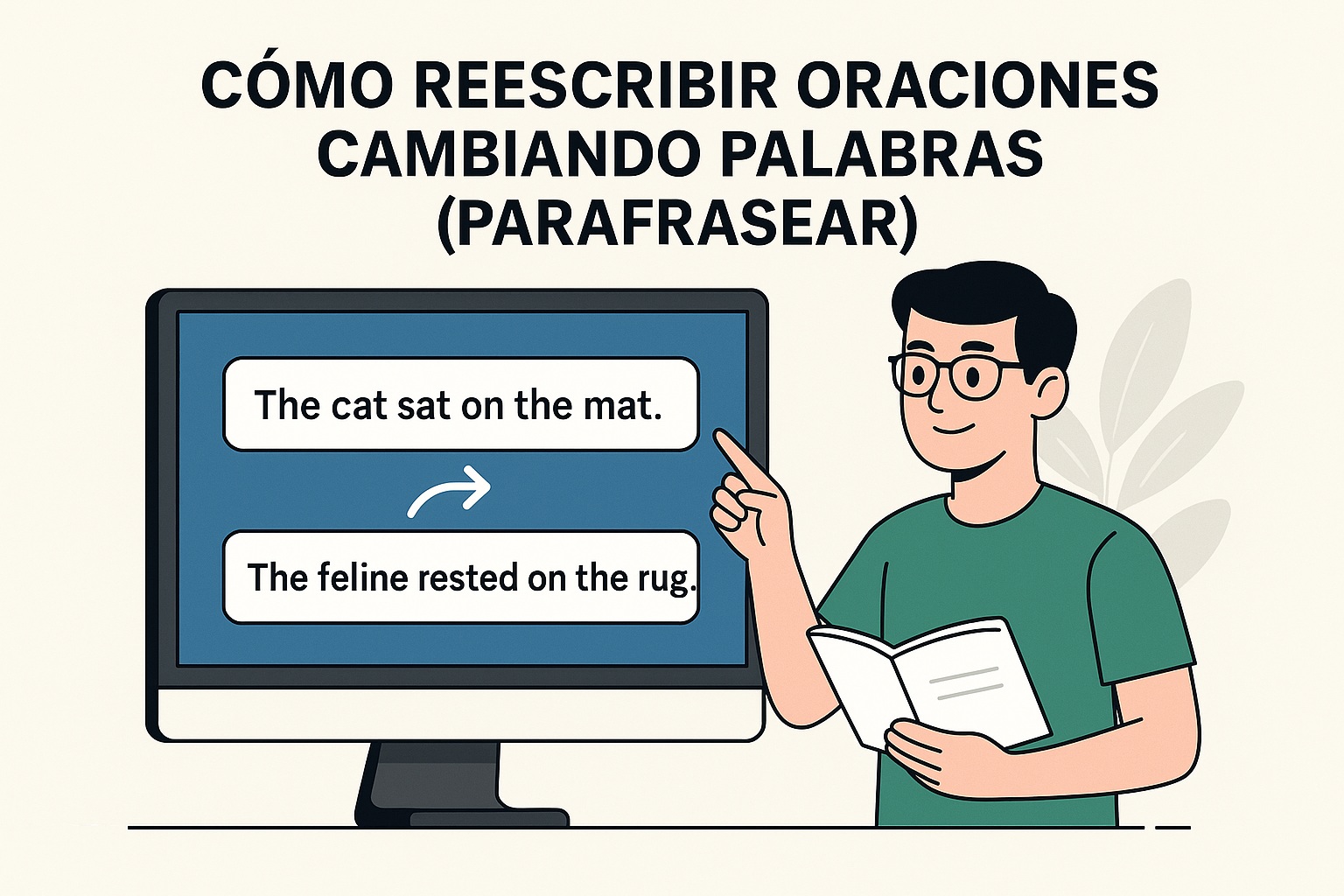
You’ve probably been told a thousand times that paraphrasing is just swapping words with synonyms. That’s a lie. If you do that, you get Frankenstein sentences that sound like a robot trying to pass as a human. I’ve tested this for years as a copywriter, and the real skill is rewriting sentences by changing words without altering the meaning or the intent. And in 2026, with AI detectors everywhere, that skill is worth gold.
What paraphrasing really is (and what it isn’t)
Paraphrasing means taking an idea and rebuilding it with your own voice. It’s not copying and pasting into QuillBot and praying. It’s not translating to Spanish and back to English either. That trick died years ago.
The real paraphrase respects the core message but changes the structure, the register, and the rhythm. You can paraphrase a legal contract into plain English, a TikTok script into a LinkedIn post, or a boring academic paragraph into something a normal person would actually read.
Why does this matter for SEO in 2026? Because Google’s helpful content system and the newer AI Overviews reward original phrasing, not keyword-stuffed clones. If your text reads like 50 other pages, you’re invisible.
Techniques that actually work to rewrite sentences without losing meaning
Forget the generic lists you find on every blog. Here’s what I use daily, with real examples.
1. Change the grammatical subject
Original: «Students should study more.»
Rewritten: «More study time is what students need.»
Same idea, different angle. The second version shifts focus from the person to the action, which changes the emphasis without changing the facts.
2. Flip the sentence order
Original: «It’s important to practice every day.»
Rewritten: «Daily practice is what makes the difference.»
You’re not just moving words around. You’re changing what the reader remembers first.
3. Go from abstract to concrete
Original: «Artificial intelligence is revolutionizing the industry.»
Rewritten: «AI now writes code, diagnoses diseases, and answers customer tickets in seconds.»
Specifics beat generalities every single time. Google’s AI Overviews love concrete data because it’s easier to cite.
4. Switch voice (active vs. passive)
Original: «The company launched the new product.»
Rewritten: «The new product hit the market thanks to the company’s launch.»
Use passive sparingly. It’s useful when the action matters more than who did it, but overusing it makes your text feel bureaucratic.
5. Combine or split sentences
Original: «I study every day. I want to improve.»
Rewritten: «I study daily because improvement doesn’t happen by accident.»
This is where most people fail. They keep the same sentence boundaries and just swap words. That’s not paraphrasing, that’s cosmetic surgery.
Paraphrasing with AI: what works and what’s a trap
Tools like ChatGPT, QuillBot, Grammarly, and DeepL Write can help you rewrite sentences by changing words fast. But if you use them blindly, you’ll get text that sounds like a corporate press release from 2015.
My rule: use AI for the first draft of the paraphrase, then edit manually. Always. Because AI tends to flatten your voice. It removes the edge, the humor, the specific references that make your content yours.
Also, AI detectors in 2026 are better than ever. Turnitin, GPTZero, and Originality.ai can spot generated text even after paraphrasing if you don’t touch it. So treat AI as a brainstorming partner, not a ghostwriter.
If your paraphrased text could have been written by anyone, it’s not good enough. It should sound like you, only sharper.
Real examples of paraphrasing in different contexts
Academic writing:
Original: «Photosynthesis is the process by which plants produce energy.»
Paraphrased: «Plants generate their energy through a process known as photosynthesis.»
Copywriting:
Original: «Our product is the best on the market.»
Paraphrased: «Thousands of users switched to this product and never looked back. Here’s why.»
Social media:
Original: «Regular exercise improves mental health.»
Paraphrased: «Your brain needs the gym as much as your body does. Science keeps confirming it.»
Notice something? None of these are just synonym swaps. They change the frame, the tone, and the reader’s entry point into the idea.
Common mistakes when you rewrite sentences by changing words
Let’s be blunt. Most people screw up paraphrasing in three ways:
- Overusing synonyms. «Important» becomes «crucial,» then «paramount,» then «pivotal.» By the third one, your reader is exhausted. Synonyms have nuances. Respect them.
- Changing the meaning by accident. «The study suggests» is not the same as «the study proves.» If you swap those, you’re lying, not paraphrasing.
- Ignoring the audience. A paraphrase for a PhD thesis and one for a TikTok caption are not the same. Adjust register, not just words.
Another trap: relying on a thesaurus without checking context. WordReference and Merriam-Webster are fine, but they don’t tell you if a word sounds natural in your specific sentence. Read it aloud. If it sounds weird, it is weird.
How to paraphrase better: my non-negotiable checklist
Before you publish anything paraphrased, run this mental checklist:
- Does the core meaning stay intact? If not, start over.
- Does it sound like a human wrote it? Read it out loud. If you stumble, rewrite.
- Is the tone consistent with the rest of the text? Don’t mix formal and casual randomly.
- Would Google see this as duplicate content? Run it through Copyscape or similar.
- Does it add something? A clearer example, a sharper angle, a better rhythm.
If you check all five, you’re ahead of 90% of content creators in 2026.
Why this skill matters more than ever in 2026
AI writes faster than you. That’s a fact. But AI still struggles with voice, nuance, and intention. That’s your edge.
Paraphrasing well is not about fooling plagiarism detectors. It’s about thinking clearly. If you can rewrite a sentence by changing words and keep the meaning intact, you understand the idea. If you can’t, you’re just copying.
And here’s the SEO angle: Google’s algorithms in 2026 prioritize content that demonstrates experience, expertise, and originality. A well-paraphrased article with your own examples and opinions will outrank a spun article every single time.
So stop looking for shortcuts. Learn to paraphrase like a human who actually has something to say. That’s the only strategy that survives algorithm updates, AI detection, and the next wave of whatever Google throws at us.