
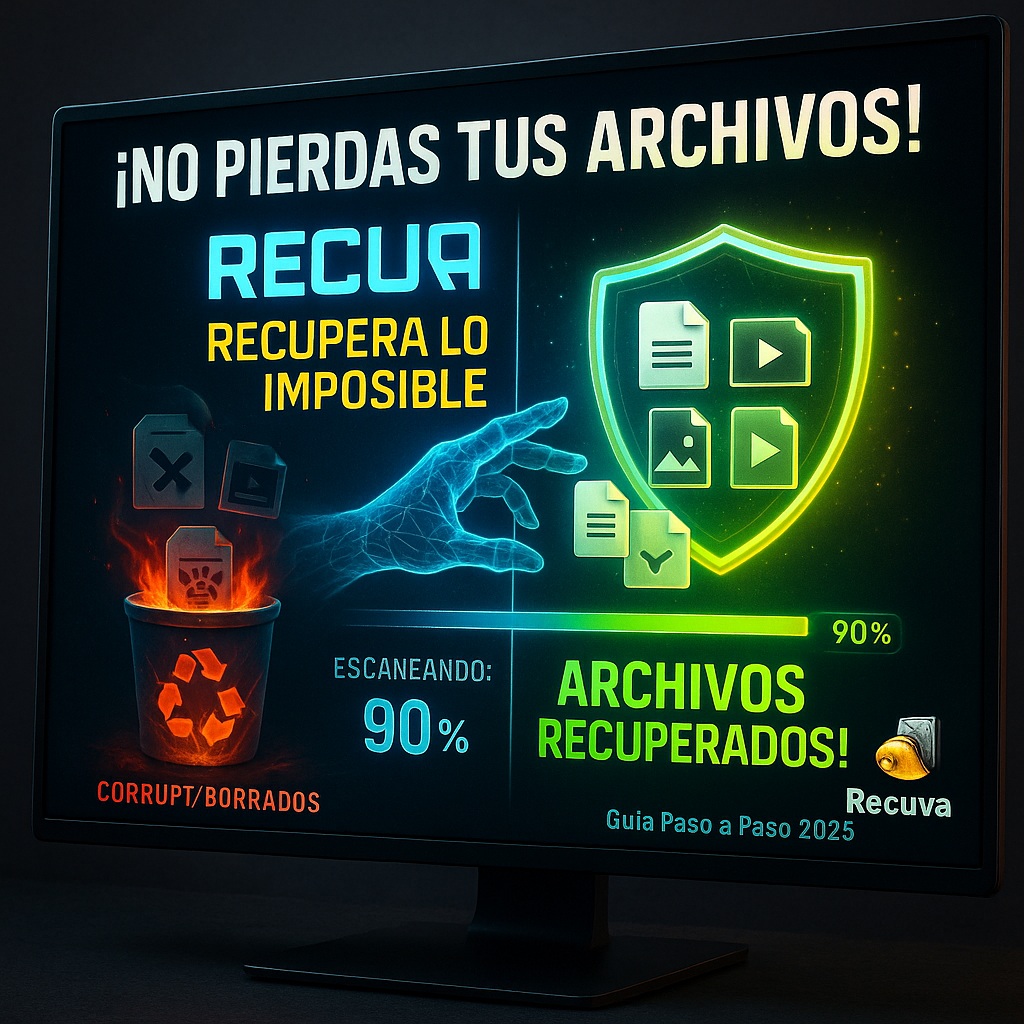
If you accidentally deleted photos, documents, or any important file… yes, it can be recovered. And Recuva is one of the most reliable programs for that. Whether you’re looking to download Recuva standard, the usual installable version, or you prefer the Recuva portable download, lighter and with no installation, here I’ll tell you everything without beating around the bush.
Because yes, sometimes it happens that you format a USB drive in a hurry, or you just empty the recycle bin and then you want to kick yourself. Relax, you’re not the only one. Luckily, Recuva (yes, it’s spelled weird but it’s pronounced “Rikova” or something like that 😅) can help you recover all that. And the best part: it has a free version, and it’s super easy to use.
Which is better: Recuva installable or portable?
This is the classic question. And like everything in life… it depends on what you need.
- Recuva standard (installable):
- Recuva portable:
- It doesn’t install. You just unzip and use it.
- Perfect for using from a USB drive or external drive.
- It leaves no traces on the PC where you use it.
👉 If you’re on someone else’s computer, or you want to recover files without installing anything, go straight for the portable version.
👉 But if it’s your usual PC and you’re going to use it often, the installable version suits you better.
How to download Recuva for free (standard and portable)
No hassle or sketchy pages. Recuva is made by Piriform, the same people who make CCleaner, so I’ll leave you the official links (no viruses or suspicious installers).
- 🔹 <a href="https://www.ccleaner.com/recuva/download/standard” data-type=”link” data-id=”https://www.ccleaner.com/recuva/download/standard”>Download Recuva standard (installable)
- 🔹 Download Recuva portable (ZIP version)
Once you go in, you’ll see something like “Recuva Free” and also the “Recuva Professional” option. The free version works perfectly for most cases.
If you want support technical or deeper recovery, then you can look at the Pro version.
How to use Recuva to recover deleted files
You don’t need to be a hacker or anything. Recuva is pretty intuitive. Here are the quick steps:
- Open Recuva (either installed or from the portable folder).
- Choose the type of file to recover (photos, docs, etc.).
- Select where they were (C drive, USB, SD card…).
- Wait for the scan. It may take a little while if it’s a deep scan.
- When it finishes, you’ll see a list. Just check what you want to recover and that’s it.
Important: Don’t recover the files to the same place where they were. Use another drive to avoid overwriting.
Common questions about Recuva (and real answers)
Does it work for formatted drives?
Yes, but the less you’ve used the drive after formatting it, the better.
Does Recuva portable lose features?
Barely. It’s practically the same, except it doesn’t install and doesn’t update itself.
Does the free version have a limit?
You can recover unlimited files. But the Pro version adds technical support and scheduled automatic recovery.
Does it work on Windows 10 and 11?
Yes, no problem. Even on older versions like Windows 7 too.
Can it recover damaged files?
It depends. If the file is partially damaged, it can restore part of it. But it doesn’t work miracles.
If Recuva didn’t work for you…
Sometimes it happens. If the damage to the drive is too severe or you’ve already written over the data, Recuva may fall short. In that case, you should look at programs like EaseUS Data Recovery or even more pro tools like R-Studio (but they’re more technical and sometimes paid).
And if your PC is running slow or acting weird, it might not be because of deleted files.