

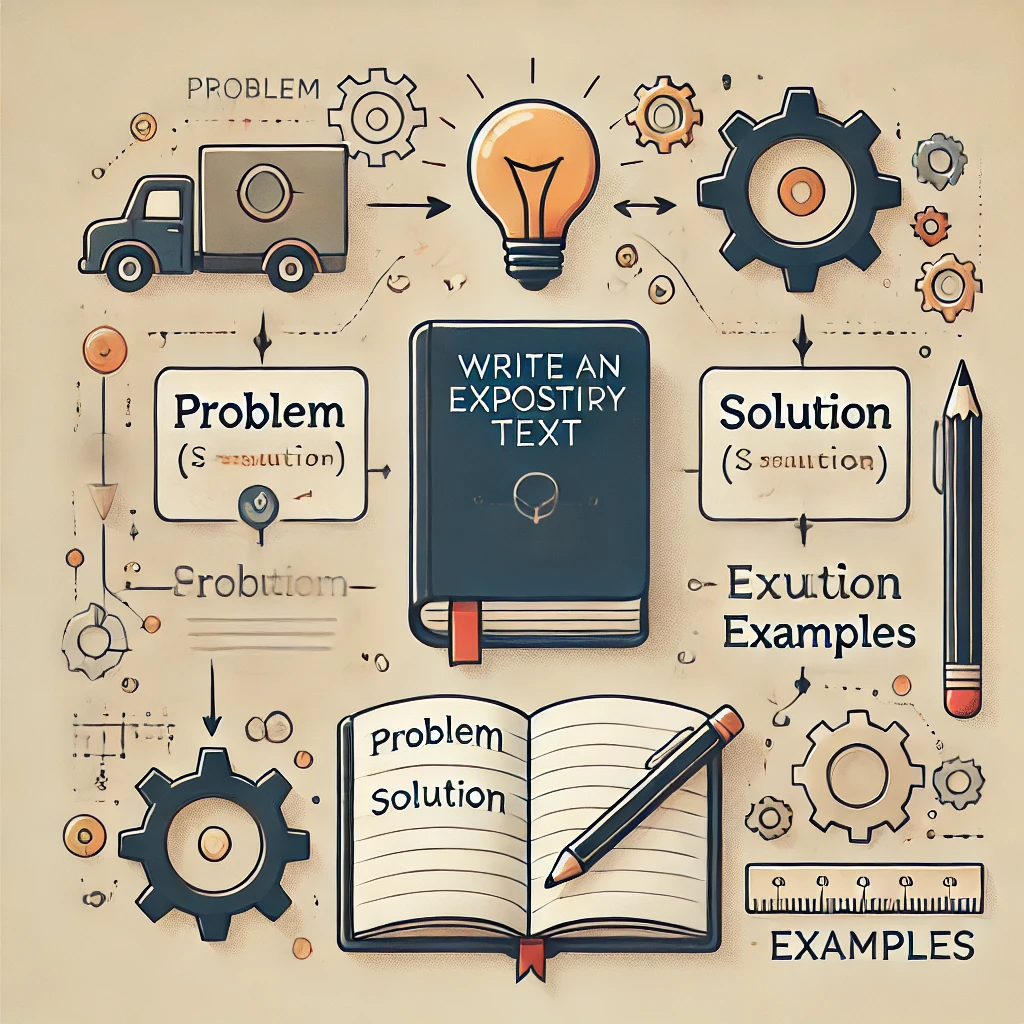
Have you ever wondered how to structure an expository text so that it is not only clear, but also engages the reader? Imagine being able to present a problem and present the solution in such a natural way that, in the end, the idea sticks in their mind. Intrigued? Here I’m going to tell you how to achieve it with practical examples that go beyond the ordinary. .
I recommend you check out this interesting article: Advertising and Marketing.
First, let’s talk about how to present a problem and solution in a text. This is the starting point of any expository text. It can be a complex situation or something as simple as a question that leaves everyone thinking. The key is to pose it in a clearly defined way, without beating around the bush. For example, imagine you want to talk about the problems brought about by climate change. Your task is to present that global difficulty in a way that the reader can quickly understand why they should care about it. Without a good problem, your text will lose its strength.
Now then, when it comes to solutions, everything changes. Here comes the intriguing twist. How do you offer an effective solution to the problem you presented earlier? This is the part where your text becomes truly useful and powerful. It’s not enough to throw out a vague suggestion; you need a concrete answer. Going back to the climate change example, viable solutions could range from emission reduction to the use of renewable energies. But the important thing is that each solution is well supported, leaving no room for doubt.
Finally, examples are essential. Why? Because they make your expository text feel more real and tangible. If the reader can relate to a specific example, the message will be much more impactful. Think of everyday examples or stories that back up your solutions. A powerful example could be the use of clean energies in a city that has significantly reduced its pollution. Now that sounds like something that can actually be done!
It is essential to understand how to present solutions in expository texts clearly and effectively. By including real examples or case studies, you get the reader to see that what you are proposing is feasible. A good practical example could be that of a sustainable city that has managed to transform its energy consumption habits.
So, do you want to write a text that truly leaves a mark? The key is knowing how to present a problem in a way that captures attention, offer a solution that effectively resolves that issue, and finally, back it all up with real examples that make your text not only read, but felt. Additionally, it is important to keep in mind the structure of an expository text, which allows you to logically organize ideas and guide the reader along the path of the argument.
Remember, expository writing techniques such as clarity, idea development, and the use of practical examples are essential to achieve a text that not only informs, but is also impactful and memorable.
expository text
What is an expository text?
An expository text aims to explain or inform about a topic in a clear and objective way, presenting facts, data, or concepts without involving personal opinions.
How is a problem presented in an expository text?
The problem is presented as a situation or difficulty that requires an explanation or solution, generally in the introduction or at the beginning of the discussion.
What is the solution in an expository text?
The solution is the proposal to resolve the problem raised in the text. It is the approach the author takes to address or resolve the mentioned difficulty.
What is the typical structure of an expository text with a problem and solution?
The structure usually includes:
Introduction with the statement of the problem.
Explanation of the context.
Presentation of the solution or possible answers.
Conclusion.
Is it necessary to give examples in an expository text?
Yes, examples help illustrate the ideas and make it easier to understand the problem and the solution presented.
How can an example be integrated to explain a problem?
An example is introduced by providing a concrete situation that reflects the problem in question, showing how it affects an individual or society.
How is the solution introduced in the text?
It is presented after having explained the problem and its context, showing possible ways to address the situation and its benefits.
What type of solutions can be presented?
Solutions can be practical, theoretical, policy proposals, behavioral changes, technological advances, etc.
How are several examples presented within an expository text?
They are introduced sequentially or in parallel, to illustrate different aspects of the problem or different approaches to the solution.
What function do examples have in an expository text?
Examples serve to clarify, reinforce, and give concreteness to the ideas being presented, making the information more accessible.
How do you prevent an expository text from becoming redundant when giving examples?
You should ensure that each example contributes something new to the text, and avoid repeating ideas already explained previously.
How is the transition made between the problem and the solution?
It can be done through a linking phrase that indicates that after having identified the problem, the possible solution will now be explored.
Why is it important for the expository text to be clear and concise?
Clarity and conciseness allow the reader to quickly understand the information, especially when it comes to explaining complex problems and their solutions.
What role does evidence play in the development of an expository text?
Evidence, such as statistics, research, or testimonies, supports the claims about the problem and the solution, increasing the credibility of the text.
Should a conclusion be included when presenting a problem and its solution?
Yes, the conclusion summarizes the key points of the problem and the solution, and can propose a call to action or suggest areas for future research.
How do you identify a problem in an expository text?
A problem in an expository text is identified by the description of a difficulty or challenge that affects a group, individual, or situation and that needs a solution.
Can an expository text have more than one solution?
Yes, a text can explore several possible solutions, comparing their advantages and disadvantages before offering a conclusion.
When is it appropriate to use fictional examples in an expository text?
Fictional examples can be useful when you need to illustrate an abstract or hypothetical concept that cannot be exemplified with real cases.
How is the importance of the solution highlighted in the text?
It is highlighted by emphasizing the benefits of the proposed solution, its possible positive effects in the future, and how it could alleviate or resolve the problem presented.
What should you do if you don’t have a specific example to illustrate a problem or solution?
You can use general examples, based on common experiences or historical situations, always making sure they are understood within the context.