
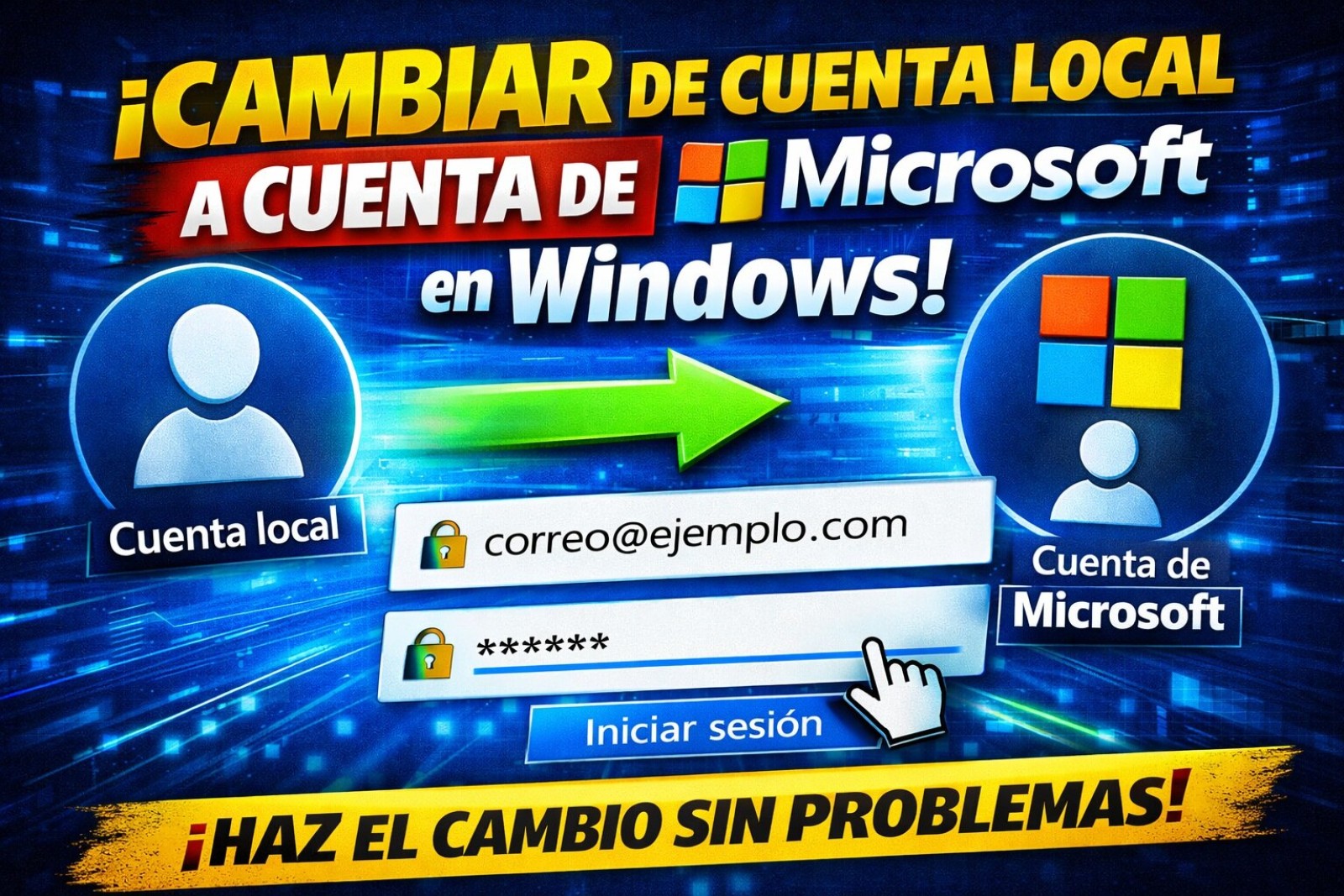
For years I had been using that invention of the “local account,” the one you log into with the name of the user that you make up yourself and that’s it. Without giving your email to anyone. But suddenly Windows, in an update, got annoying. A pop-up started appearing every other minute: “Sign in with a Microsoft account to take advantage of all the features.” Like that fly buzzing around that won’t let you sleep.
And of course, you end up getting fed up. But watch out, this isn’t like changing your profile picture. This is more delicate.
Most people don’t know it, but when you hit that “Switch to a Microsoft account” button, what you’re doing is hooking your computer up to the cloud. And hey, it’s cool, sure. You sync your wallpaper, your Edge passwords… but you’re also giving them the key to your desktop. Take it from me, it took me a whole afternoon to undo the mess .
The first thing you need to be clear about is why you’re doing it. If you just want to stop seeing that annoying notice, don’t fall for it. The trick is not to hit the big button. But if you really need the Microsoft Store to download some program or you want to use OneDrive so you don’t lose your documents, then fine, you have to make the switch.
But there’s a huge mistake that everyone makes. They think they just have to enter their email and that’s it. And then it turns out that the Office license, or the games you bought with another account, disappear. The system tells you “hey, you don’t have the license here.” And you’re left with a look on your face… Because the games or Office stay tied to the old account, they don’t magically transfer .
To do it right, you have to use the “bridge” method. Which sounds really cool but it’s a piece of cake. First switch to a local account. Just like that, without meaning to. Then restart, and when you log back in, that’s when you hit “sign in with a Microsoft account.” That way you trick it. That way you tell it: “look, it’s a new user,” but in reality all your documents, the photos in the downloads folder, and the shortcuts stay right where they were .
What nobody tells you about is the mess with saved passwords. If in Chrome or in Windows itself you had your bank or work passwords saved, watch out. Password syncing in the cloud sometimes eats the ones you had saved only locally. I lost my work WiFi ones and had to ask for them again. Embarrassing .
And speaking of work. If the laptop belongs to the company, don’t even think about doing this. That’s off-limits. Because if you switch from a local account to a Microsoft account on a device that’s controlled by the company administrator, you lock it. It asks you for the verification code from your personal email and won’t let you in. It happened to me with one that a cousin brought me to “fix.” It almost cost him his job .
In the end, the trick is to look carefully in “Settings > Accounts > Your info.” There it clearly tells you whether you’re on the local one or the Microsoft one. If you see it says “Verify,” that means the Microsoft account is half-done, hanging, and it’s going to give you problems. You have to unlink everything before you start.
My recommendation, after going around in circles so many times, is that if you have more than one computer at home, yes, it’s worth having the Microsoft account. Because things sync and you don’t have to be setting everything up twice. But if you only have one, and especially if you use it to play on Steam or for university stuff, leave it on local. You save yourself headaches and, above all, you don’t give Microsoft the power to mess up your login if you forget your email password .