

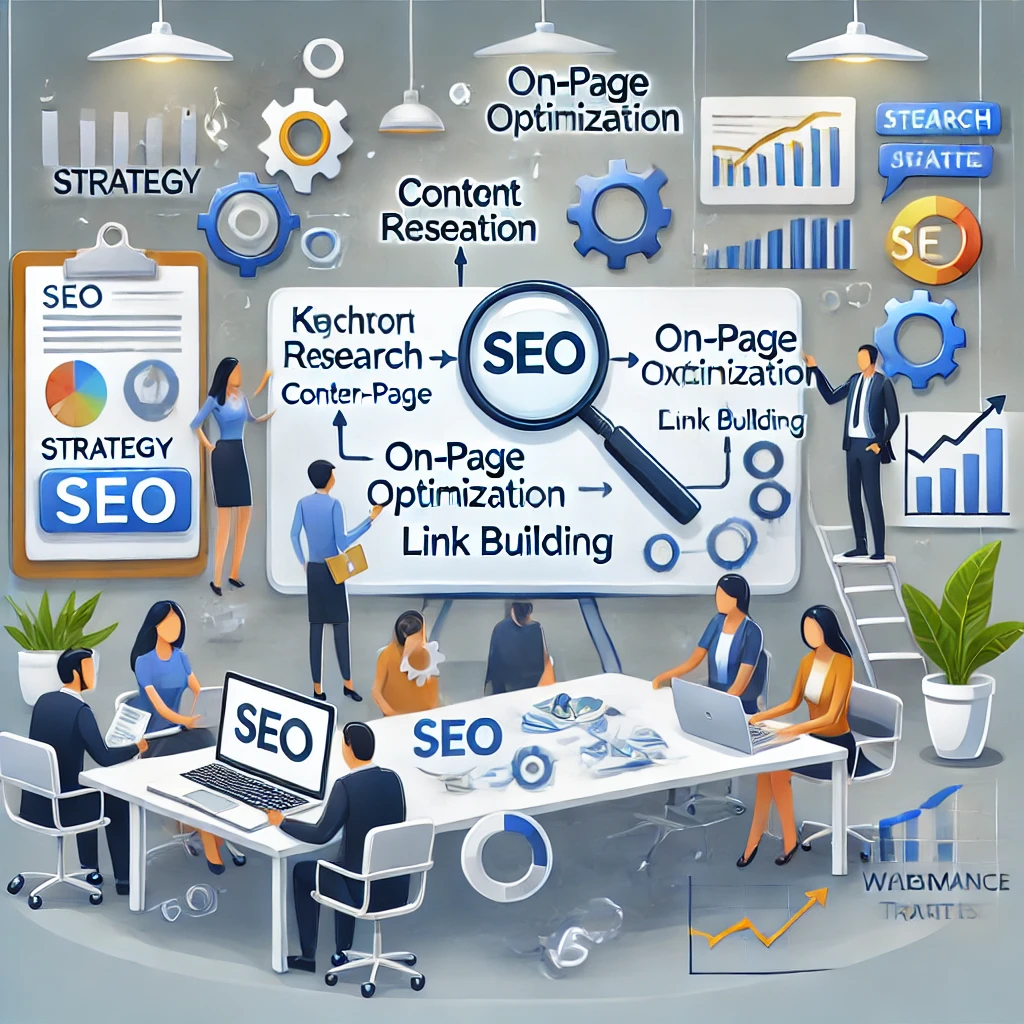
Let’s cut the crap: most SEO action plans fail because they’re written to impress a client, not to move a needle. You don’t need another 40-page PDF with keyword lists nobody will ever touch. You need a working SEO action plan that tells you exactly what to do on Monday morning when you open your laptop. That’s the difference between ranking and praying.
I’ve watched sites with 50 blog posts outrank sites with 500. The difference wasn’t content volume. It was whether the SEO strategy action plan actually addressed what Google’s algorithm cares about in 2026: intent matching, technical cleanliness, and entity authority. Everything else is noise.
What an SEO Action Plan Actually Is (And What It Isn’t)
An SEO action plan isn’t a list of keywords. It isn’t a content calendar. It isn’t «we’ll optimize the meta descriptions.» Those are tasks. An action plan is a sequenced roadmap where every task connects to a measurable outcome, and every outcome ties back to revenue or leads.
Here’s the uncomfortable truth: if your action plan doesn’t specify who does what by when and how you’ll know it worked, it’s not a plan. It’s a wish list. I’ve audited dozens of small business sites, and the ones stuck on page 4 all share the same flaw — they treat SEO as a single project instead of an operating system.
Google’s 2024 leaked ranking docs and the subsequent API leaks confirmed what practitioners suspected for years: site-wide quality signals matter as much as individual page optimization. That changes how you should build your action plan. You can’t just fix one page. You have to fix the pattern.
The Audit That Comes Before Any Strategy
Skip this step and everything downstream rots. Before writing a single content brief, run a technical crawl. Screaming Frog, Sitebulb, whatever tool you prefer — just do it. Look for orphan pages, redirect chains longer than two hops, and index bloat from tag archives.
Then check Core Web Vitals in Search Console. In 2026, Interaction to Next Paint (INP) replaced First Input Delay as a core metric, and plenty of sites still haven’t adapted. If your INP is above 200ms, your SEO ranking factors are being suppressed regardless of how good your content is.
I’d also pull a backlink audit. Not for disavowing (Google’s SpamBrain handles most of that now), but for understanding which pages attract links and which don’t. That tells you where your internal linking should point.
Keyword Research That Goes Beyond Volume
Volume is a vanity metric. What you want is commercial intent mapped to your funnel stage. A keyword with 200 monthly searches and high buying intent beats a 20,000-volume informational term every single time for a business site.
Build your keyword clusters around topics, not individual phrases. Google’s helpful content system evaluates topical coverage, so ten articles covering one topic in depth will outperform fifty scattered posts. This is where most SEO action plan templates fall apart — they don’t cluster.
Use tools like Ahrefs, Semrush, or even Google’s own People Also Ask to find the questions your competitors are ignoring. Those gaps are where you win fast.
On-Page and Off-Page Aren’t Separate Anymore
The old split between on-page and off-page is misleading in 2026. Google uses link data to understand page context, and page content to interpret link relevance. They feed each other.
So your action plan should include:
- Entity optimization: make sure your brand, authors, and topics are clearly identified with schema markup
- Internal linking architecture: hub pages linking to supporting content, not random blog-to-blog links
- Digital PR: earning mentions on sites that Google’s Knowledge Graph recognizes as authoritative in your niche
- Content refresh cycles: updating old posts every 6-12 months with new data and examples
Notice what’s missing? Guest posting on random blogs. That tactic’s ROI collapsed years ago. If your action plan still has «build 50 backlinks per month» as a goal, you’re optimizing for a game Google stopped playing.
Local SEO Is a Separate Beast
If you serve a geographic area, your SEO action plan needs a local component that doesn’t exist for national brands. Google Business Profile optimization, review velocity, local citations, and location-specific landing pages aren’t optional — they’re the entire game.
The businesses dominating local packs in 2026 share three traits: consistent NAP data, a steady stream of genuine reviews, and location pages that actually differ from each other. Copy-paste city pages get filtered. Don’t waste time on them.
How to Measure Without Drowning in Dashboards
Three metrics matter for measuring your SEO action plan‘s success: qualified organic traffic (users who match your ICP), conversion rate from organic, and branded search volume growth. Everything else is secondary.
Branded search is the most underrated KPI. When people start Googling your company name, it means your content is building real authority. That’s the compounding effect no paid channel can replicate.
If you can’t explain in one sentence how a task in your plan moves one of those three metrics, delete the task. Ruthlessly.
Mistakes That Quietly Kill Rankings
The most common one I see isn’t a technical error. It’s inconsistency. A site publishes three posts in January, nothing until June, then five in July. Google’s systems interpret that pattern as low commitment. Publishing one solid post every two weeks beats sporadic bursts every time.
Second mistake: ignoring image optimization. Uncompressed hero images tank LCP, and LCP is still a Core Web Vital. WebP or AVIF, lazy loading below the fold, and descriptive alt text — non-negotiable in 2026.
Third: not checking page speed on mobile specifically. Desktop scores lie. Over 60% of searches happen on phones, and Google indexes the mobile version of your site. If mobile is slow, that’s the version being judged.
Tools That Actually Earn Their Subscription
You don’t need ten tools. You need four: a crawler (Screaming Frog), a keyword/backlink platform (Ahrefs or Semrush), Search Console, and GA4. Add a rank tracker if you’re obsessive. Everything else is a distraction dressed as productivity.
Free alternatives exist — Google Keyword Planner, Bing Webmaster Tools, Ubersuggest’s free tier — but they’ll cost you time. Decide what your time is worth and stop pretending the free stack is equivalent.
Sequencing the Plan So It Doesn’t Collapse
Start with technical fixes because they unblock everything else. Then build topical clusters. Then earn links to those clusters. Then refresh and expand. That order isn’t arbitrary — it mirrors how Google evaluates sites.
Reverse it and you’ll be building links to pages that can’t rank because they’re technically broken. I’ve seen agencies do exactly that and then blame the algorithm.
A working SEO action plan isn’t glamorous. It’s a checklist you actually execute, reviewed monthly, adjusted quarterly. The sites winning in 2026 aren’t the ones with the smartest strategy documents. They’re the ones that did the boring work consistently while everyone else was chasing the next hack.
