

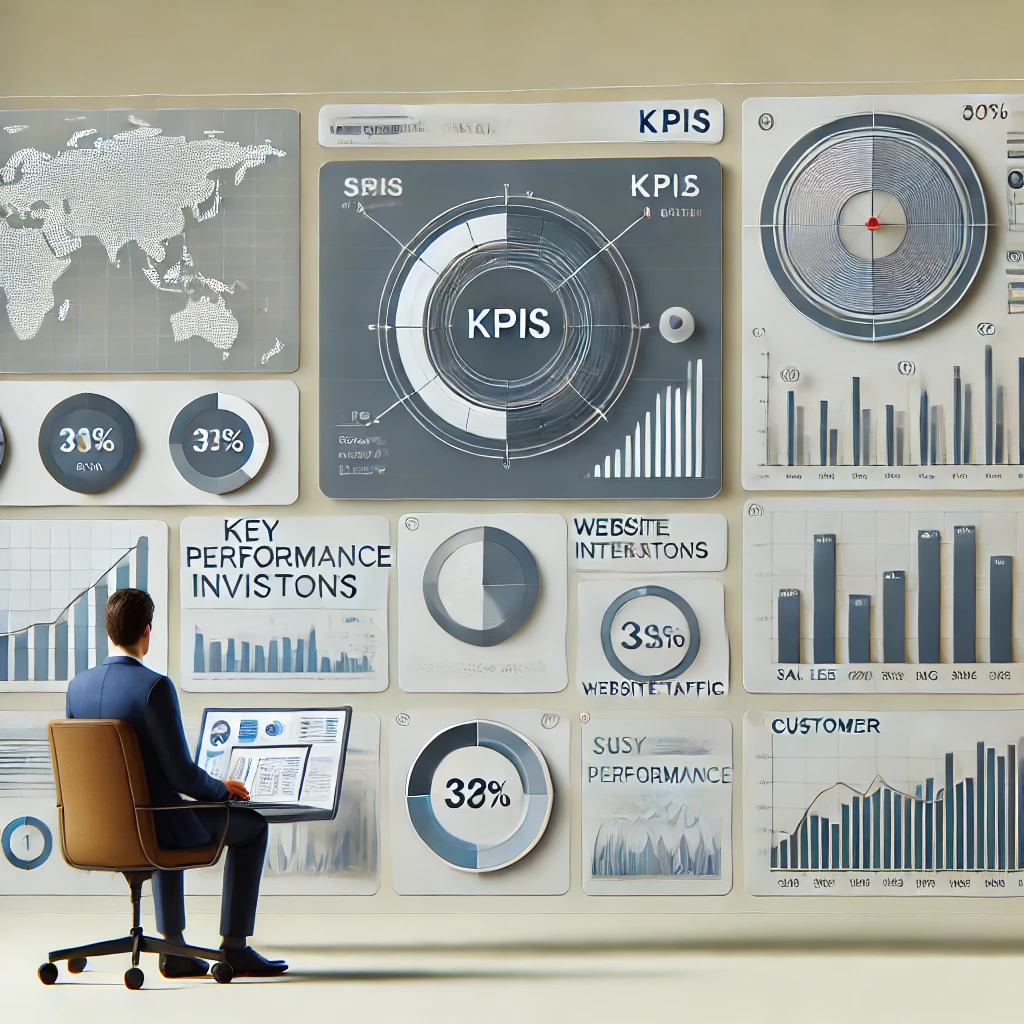
Most companies drown in dashboards. They track everything: page views, likes, email opens, revenue, churn, NPS… and yet they still miss the one number that actually predicts whether they’ll be alive next year. A Key Performance Indicator (KPI) is not a metric. It’s a decision-making weapon. And if you’re treating it like a vanity badge, you’re already sabotaging your company’s success without even realizing it.
What a KPI really is (and what it absolutely isn’t)
A KPI measures progress toward a specific, strategic goal. That’s it. If a number doesn’t change a decision you’re about to make, it’s not a KPI — it’s noise. The classic definition gets thrown around in every MBA course, but the street-level truth is simpler: a KPI is the number that keeps you up at night because it tells you if you’re winning or losing.
For an e-commerce store, the conversion rate is a KPI. For a SaaS startup, monthly recurring revenue (MRR) and churn are KPIs. For a content site in 2026, it might be returning visitors or email subscribers — not raw traffic, which AI Overviews have quietly gutted for many publishers.
Here’s the uncomfortable part: Google’s 2024 leak and the 2025 core updates made it brutally clear that traffic alone is a fragile KPI. Sites that built their entire strategy around sessions collapsed when AI summaries started answering queries directly. The companies that survived had diversified KPIs: branded search volume, direct traffic, conversion rate, customer lifetime value (LTV).
Why your KPIs might be quietly killing your business
Tracking the wrong KPI is worse than tracking nothing. It creates false confidence. You hit the number, celebrate, and then wonder why the bank account looks the same. This happens constantly with vanity metrics disguised as KPIs.
Think about it: a marketing team obsessed with impressions will keep buying cheap, low-intent traffic. A sales team measured only on calls made will burn through leads without closing anything. The KPI shapes the behavior — and bad behavior compounds.
The fix isn’t more KPIs. It’s fewer, sharper ones tied directly to cash flow and customer value. If a KPI can’t be traced to revenue, retention, or cost reduction within two steps, demote it to a secondary metric.
How to pick KPIs that actually move the needle in 2026
Forget generic lists. Here’s a filter I use and defend: every KPI must pass three tests — actionable, attributable, and time-bound. If you can’t act on it this week, if you can’t attribute it to a team, or if it has no deadline, it’s a hobby, not a KPI.
Start by writing down the single most important business outcome for the next 90 days. Then work backward. If the goal is «increase profit by 20%,» your KPIs might be average order value (AOV), customer acquisition cost (CAC), and repeat purchase rate. Nothing else belongs on the primary dashboard.
Align KPIs with your SEO and content strategy too. In 2026, ranking #1 matters far less than being cited by LLMs and converting that visibility into email subscribers or demos. So your KPI shouldn’t be «position 1 for X keyword» — it should be «qualified leads from organic search per month.»
Real KPI examples by department (steal these)
Different functions, different numbers. Here’s what actually works in the wild:
- Marketing: conversion rate, CAC, ROI per campaign, branded search growth.
- Sales: monthly revenue, average deal size, win rate, sales cycle length.
- Customer service: first response time, CSAT, first contact resolution rate.
- Product/ops: activation rate, feature adoption, delivery time, operating cost per unit.
- Retention: churn rate, LTV, net revenue retention (NRR).
Notice what’s missing? Open rates. Impressions. Follower counts. Those are inputs, not outcomes. They can inform tactics, but they should never sit on the executive dashboard.
The mistakes that turn KPIs into corporate theater
The number one killer: too many KPIs. When everything is a priority, nothing is. I’ve seen companies with 40 KPIs and zero clarity. Cut it to five. Five is already pushing it.
Second killer: setting KPIs without a baseline. If you don’t know your current churn, how will you know if 5% is an improvement or a disaster? Measure first, target second.
Third: never reviewing them. A KPI that isn’t reviewed weekly or monthly is decoration. Put it in a recurring meeting with a named owner. No owner, no KPI.
Fourth: only celebrating when things go wrong. KPIs reveal wins too. If your team hit a record NRR, say it out loud. Metrics drive behavior — including emotional behavior.
What most guides won’t tell you about KPIs
The dark side of KPIs is gaming. People optimize for the number, not the goal. Sales reps sandbag deals to hit next quarter’s target. Support agents close tickets without solving problems to lower resolution time. This is called Goodhart’s Law: when a measure becomes a target, it ceases to be a good measure.
The defense is pairing every KPI with a counter-metric. Track resolution time and CSAT. Track sales revenue and churn 90 days later. Track traffic and conversion. One without the other is a trap.
If your KPI can be gamed without improving the business, you chose the wrong KPI.
So before you add another dashboard widget, ask yourself one question: does this number change what I do tomorrow? If the answer is no, delete it. Your company’s success depends less on how much you measure and more on how ruthlessly you decide what deserves to be measured at all.
