

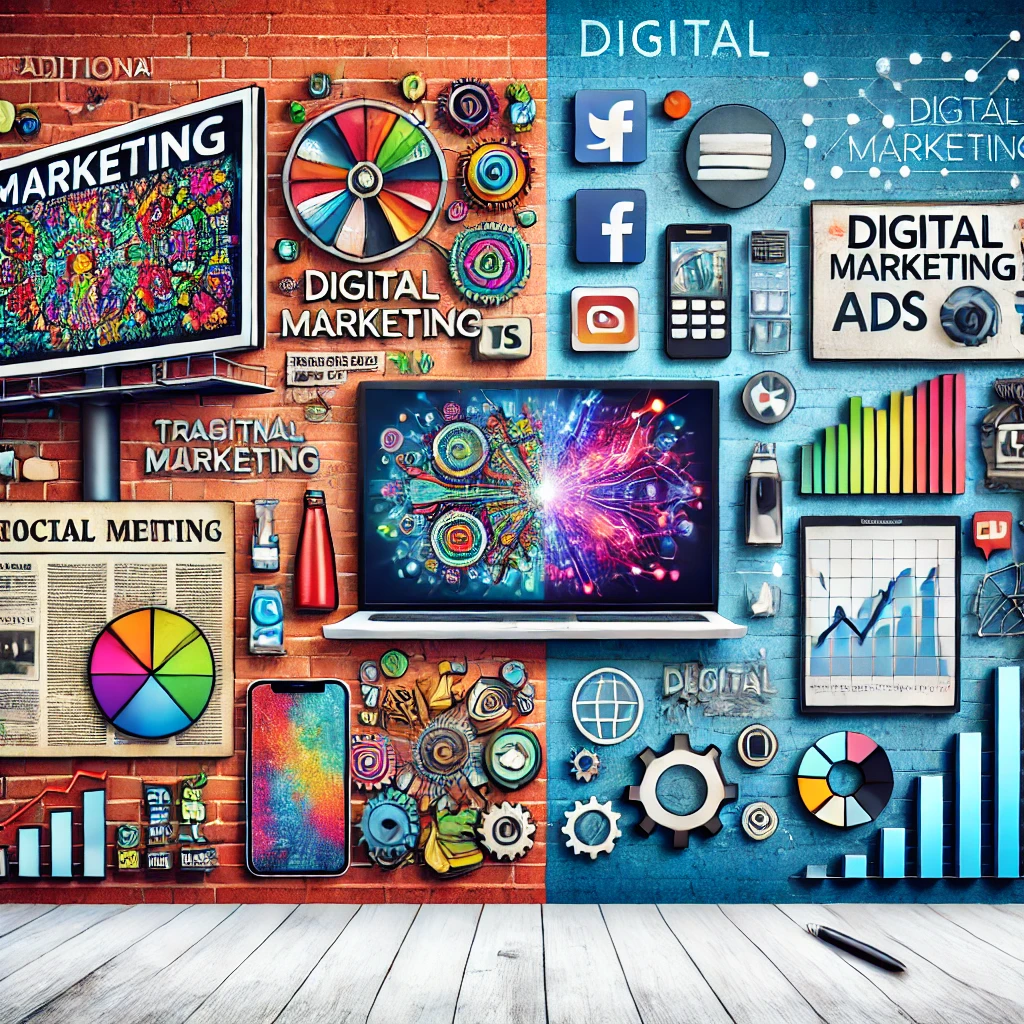
If you’re still dumping your entire budget into a single channel, you’re leaving money on the table. The traditional marketing vs digital marketing debate isn’t about picking a side — it’s about knowing exactly when each one earns its keep. And in 2026, the rules have shifted enough that most of the advice floating around online is already outdated.
Let me break down what actually works, based on how real businesses are spending their money right now.
What Traditional Marketing Really Is (And When It Still Wins)
Traditional marketing covers any offline channel: TV spots, radio ads, newspaper inserts, billboards, direct mail, sponsorships, trade shows. These are the advertising strategies that have been used for decades to grab attention through physical media.
The core strength of traditional marketing is reach through familiar channels. People trust what they already know. A billboard on the highway your customers drive every day builds brand recognition in a way a Facebook ad simply can’t replicate.
But here’s the catch most blog posts skip: traditional marketing works best when your audience is geographically concentrated and not glued to a screen. Local plumbers, car dealerships, restaurants, hardware stores — these businesses still get real ROI from radio and print.
In markets where the target audience isn’t fully digitalized, traditional advertising isn’t just «still relevant» — it’s often the only channel that reaches them at scale.
Where Digital Marketing Runs Circles Around Traditional
Digital marketing uses search engines, social platforms, email, and programmatic display to target specific audiences with surgical precision. It’s cheaper, faster to deploy, and — most importantly — measurable in real time.
The biggest difference between traditional marketing vs digital marketing is feedback speed. With Google Analytics, Meta Ads Manager, or a simple UTM-tagged link, you know within hours which ad is printing money and which one is burning it.
Traditional media gives you a ratings estimate weeks after the campaign ran. That gap matters when you’re running lean.
Digital also enables two-way conversation. Comments, DMs, reviews — users talk back. That builds a tighter bond than any one-way TV spot ever could.
Advantages of Traditional Marketing You Shouldn’t Ignore
- High emotional impact through TV, cinema, and large-format print that dominates attention.
- Instant credibility — being featured in a respected newspaper or magazine still carries weight.
- Physical interaction with promotional materials, samples, and event booths.
- Reaches people offline — rural areas, older demographics, and regions with spotty internet.
- Less ad fatigue — you’re not competing with 40 other brands in the same feed scroll.
Advantages of Digital Marketing in 2026
- Global reach with micro-segmentation — target by zip code, income, behavior, or life event.
- Real-time measurement and instant optimization of every campaign.
- Lower entry cost — you can start with $10 a day and scale what works.
- Direct interaction through comments, DMs, and user-generated content.
- Scales up or down without renegotiating media contracts.
The Honest Downsides of Each Approach
Digital marketing isn’t magic. It’s dependent on technology and internet access, it’s brutally hard to stand out in saturated niches, and a single reputation crisis can tank your visibility overnight. Algorithm changes can wipe out a channel you relied on for years.
Traditional marketing has its own problems: high production costs for large-scale campaigns, almost impossible attribution, lower total reach compared to digital, and it’s impractical if you’re trying to grow internationally from day one.
Anyone telling you one approach is universally better is selling something.
How to Decide Between Traditional Marketing vs Digital Marketing
Stop asking which is better. Ask where your buyers actually are and what stage of awareness they’re in.
- Map your audience’s media diet. Where do they spend time — streaming, driving, scrolling, reading?
- Check your budget reality. Digital usually stretches further, but a single local radio spot can outperform a poorly targeted ad campaign.
- Define your goal. Brand awareness favors traditional. Direct response favors digital.
- Run A/B tests across channels. Measure cost per acquisition, not vanity impressions.
- Double down on what converts. Kill what doesn’t. No loyalty to channels.
Why the Hybrid Approach Is Winning in 2026
The smartest businesses aren’t picking sides in the traditional marketing vs digital marketing fight. They’re linking them. A billboard with a QR code. A podcast ad with a dedicated landing page. A direct mail piece with a personalized URL.
When you connect offline touchpoints to online tracking, you finally get attribution for traditional channels — the Holy Grail that used to be impossible.
Personalization and data integration now power authentic connections with consumers. Companies building hybrid experiences — physical campaigns feeding digital funnels — are the ones pulling ahead in competitive markets.
The Real Future of Marketing
Marketing in 2026 isn’t traditional or digital. It’s fluid. The winners are the businesses that treat every channel as a tool, not an identity. They test relentlessly, measure everything, and aren’t afraid to abandon a «proven» tactic when the data says otherwise.
If you’re still arguing about which type of marketing is best, you’ve already lost the plot. Your competitor is busy running both and tracking which one actually pays the bills.
