

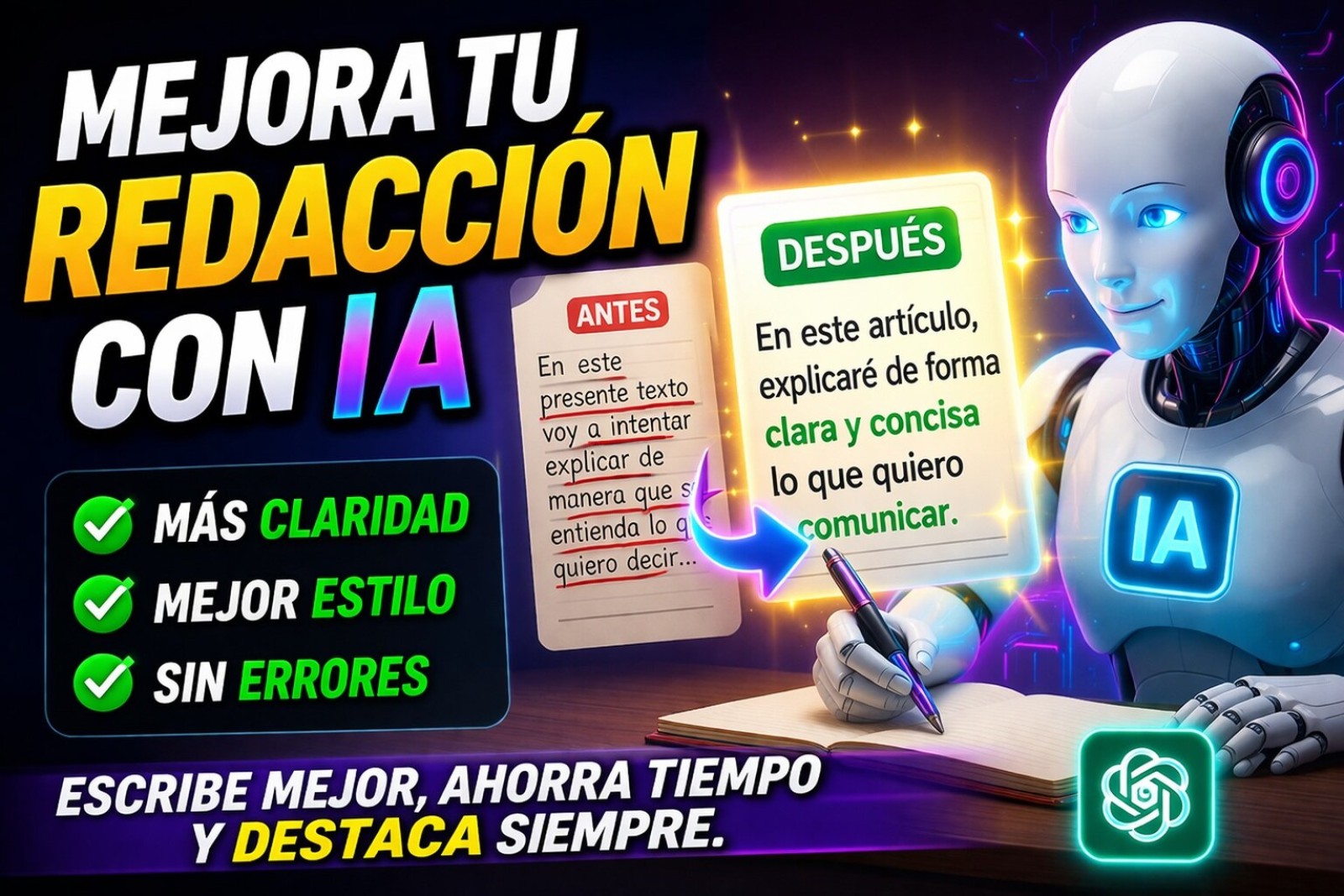
Everyone’s using AI to write these days, but the smart ones know how to hide the fingerprints. If you’re tired of sounding like a robot and want to improve writing with AI without anyone knowing, this is your playbook.
Pick the right AI writing assistant for the job
Not all AI tools are built the same. ChatGPT and Claude are the heavyweights — they understand context and can help you break through writer’s block. Ask them for five different angles on a topic (ironic, technical, personal, scary) and suddenly you’ve got a runway to take off from.
ChatGPT Work, launched by OpenAI recently, takes it further: it connects to over 1,400 add-ons and can turn rough notes into documents, spreadsheets, or web apps on its own. If you hate building presentations, this could be a lifesaver for improving writing with AI without anyone knowing you used it.
For fine-tuning phrasing, Wordtune is my go-to. It doesn’t rewrite whole paragraphs; it offers sentence-by-sentence alternatives, like a friend suggesting a better way to say something. Less invasive, more useful.
Why most AI writing tools make you sound generic
One-click full-article generators are the enemy of authenticity. They work for filling affiliate blogs with soulless content, but if you’re building a personal brand, they’re poison. They sound like an instruction manual translated by Google, and 52% of marketing professionals already see content saturation as their main challenge. More content isn’t better — it’s more noise.
The key to improving writing with AI without anyone knowing is to use it as a companion, not a substitute. AI gives you efficiency and a draft; you add the strategic perspective, the voice, and the judgment.
The hybrid workflow that actually works
Here’s my current process for improving writing with AI without anyone knowing:
- Brainstorming with AI: I ask for 30 headlines, discard 25, and keep 5.
- Structure by hand: I take the chosen headline and make an outline on paper (yes, actual paper). AI helps organize ideas, but I set the structure.
- Raw writing: I write without filters, as if I were telling a friend about the topic on a terrace.
- Assisted generation: I hand my text to AI and ask for three versions of each paragraph. I take the best bits and mix them with mine.
- Final editing: This is where the real work happens.
The typical mistake is skipping steps 2 and 3. If you ask AI to do the structure AND the content, the text will taste like AI. The essence has to be yours, and the form comes from it.
Best AI grammar checkers for invisible polishing
Grammarly is still king for English grammar and punctuation. It explains why something is wrong, not just corrects it. LanguageTool is the best for Spanish, with a powerful free version that catches errors others miss, like «por qué» vs «porque.» QuillBot surprised me: it doesn’t just correct, it offers rewriting options. I use it when a sentence sounds weird but I can’t pinpoint why.
My trick: never accept the first suggestion. If the checker tells me to change «usar» to «emplear» and «usar» is my word, I keep it. The checker is there to catch typos, not to homogenize my vocabulary. And I always do a final read-aloud — if it sounds like a robot, I change it.
AI and SEO in 2026: from Google to generative engines
SEO isn’t dead — it’s evolved. Now you have to optimize for AI-driven search ecosystems like ChatGPT, Perplexity, and Claude. This is called GEO (Generative Engine Optimization). 80% of what you do for SEO already helps with AI, but that extra 20% makes the difference.
Use «Answer Capsules»: answer questions directly right after an H2 heading. 72.4% of posts cited by LLMs use this technique. AI systems don’t render JavaScript the same way Google does, so keep key content in HTML.
Structured data (Schema Markup) with JSON-LD is almost mandatory — AI models improve information extraction from 16% to 54% when well-placed structured data is present. And recent content (less than 3 months old) is 3 times more likely to be cited by AI.
The human factor AI can’t fake
AI doesn’t just evaluate your text, it evaluates your entity. Your brand’s search volume is the main predictor of being cited in LLMs. That’s why having a presence in the media, being consistent on social media, and having a well-crafted «about me» page is more important than ever.
Improving writing with AI without anyone knowing isn’t about hiding the tool — it’s about using it so well that your voice remains unmistakable. AI can generate a thousand ideas, but only you know which one is right for your brand.
Content automation without losing your soul
Automation is tempting, but if you automate everything, you’ll end up with content that reads like a machine wrote it because a machine did write it. Use automation for repetitive tasks — formatting, scheduling, data analysis — and keep the creative work human. That’s how you improve writing with AI without anyone knowing, and without sacrificing what makes your content worth reading.
