
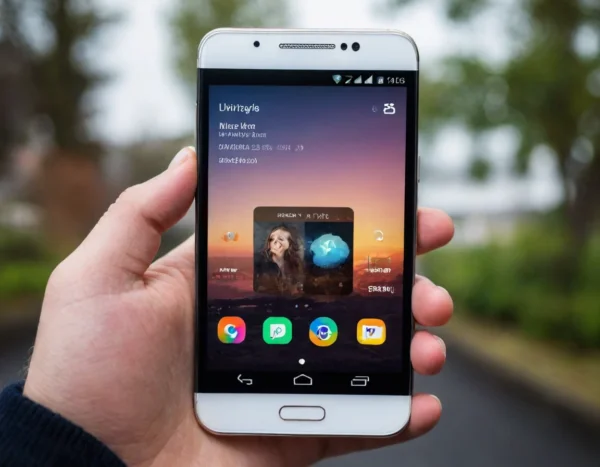
If you woke up to the <a href=”https://www.empresadeserviciosweb.com/servicios/aplicacion/”>app closed and not opening, first check your phone. Since mid-January 2026, WhatsApp stopped working on many old cell phones that don’t meet the new technical requirements. The company periodically updates these requirements to improve security and performance, which ends up excluding old devices.
The list of affected devices is specific. For iPhone, if you have a model 6, 6 Plus, 5, 5c, or 5s, it’s very likely that’s your problem, since they can’t be updated to iOS 15.1, the minimum version now required. On Android, the situation is broader: the minimum requirement is Android 5.0. Models like the Samsung Galaxy S4, the HTC Desire 500, the LG Optimus L3 II, or the Huawei Ascend Mate are left out, basically any phone released before 2014 that the manufacturer no longer updates.
The phone doesn’t warn you clearly. The app starts to fail: it closes on its own, doesn’t send messages, or directly blocks your access with a message asking for an update that your system can’t perform. It’s the abrupt way in which technology leaves behind devices that, for many people, worked perfectly.
Suspended WhatsApp accounts and how to deal with it
The block may not have to do with the phone, but with your account. Seeing the message “This account does not have permission to use WhatsApp” is different and more alarming. It usually happens for violating, often without knowing it, Meta’s usage policies.
The most common cause is using modified versions of the app, such as WhatsApp Plus or GB WhatsApp. For the automatic detection system, that’s a direct violation of the rules. You can also be suspended for behavior that looks like spam: sending the same message to many strangers, creating many groups quickly, or having several people report or block you in a short time. Even using unauthorized AI bots to automate responses is grounds for a penalty.
If you think it was a mistake, you have to act fast. Within the same suspension screen, a button to “Request review” usually appears. When you tap it, you can send a brief and concise message explaining your situation. If there’s no button, the path is to write to official technical support: support@whatsapp.com. Include your number in international format and your cell phone model. The response can take between one and two days.
Communicating with WhatsApp support
When you have a problem, knowing where to turn is key. The main official channel is through the app itself, in the Settings > Help > Contact Us section. For a suspension, the email support@whatsapp.com is the specific channel.
Beyond that, the options are limited. The company has a physical address in Menlo Park, California, but it’s for legal or corporate matters, not for regular user support. The reality is that WhatsApp is designed not to require much human support; almost everything is handled by automated systems and within the app. This means that when something fails, the feeling of helplessness is great.
Practical measures before WhatsApp blocks you
If your phone is on the incompatible list, your only real way out is to change devices. But before doing so, there’s a critical step that many overlook: backing up your chats. On Android, it’s done from WhatsApp Settings > Chats > Backup, and it’s saved to Google Drive. On iPhone, it’s similar and it’s backed up to iCloud. Without this step, when installing WhatsApp on a new phone, you’ll lose all your conversation history and files.
Also check your operating system version, just in case. On iPhone: Settings > General > About. On Android: Settings > About phone. If an update is available, install it. But if your model is one of those mentioned, chances are there isn’t one.
Risks of continuing to use obsolete systems
The reason for these cutoffs isn’t arbitrary. An expert cited in the articles points out that more than 25% of users in Latin America still use old operating systems. The problem is serious: these devices don’t support nearly 40% of the new security layers of modern applications.
The consequence is a vulnerability risk that can increase by up to 60%. Without security patches, your phone and all the information on it (not just WhatsApp) are an easy target for malware, data theft, or impersonation. Maintaining compatibility with such old software holds back the entire platform, generating failures and unexpected crashes for everyone.