
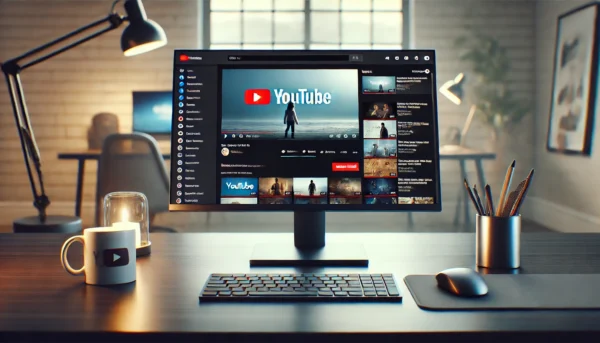
Let me tell you that I’ve also run into that dreaded error 400 on YouTube more times than I’d like. It’s one of those messages that completely kills the mood, right when you’re hooked on a video. The thing is, even though the message says “problem with the server,” it’s almost never YouTube’s fault, but rather something on your device or connection<a href="https://decodo.com/blog/youtube-error-400″ target=”_blank” rel=”noreferrer noopener”>. Basically, your browser or app sends such a strange or malformed request to the server that it can’t understand it and returns this error as a “I don’t know what you’re trying to tell me”.
One of the first things I’d look at is the Restricted Mode. You turn it on so inappropriate content doesn’t show up, but sometimes it gets too clever and blocks things it shouldn’t, causing the error 400. Same goes for some ad blockers or browser extensions; they’re there to help you, but they can accidentally break the communication with YouTube. If the error shows up on your computer, try opening YouTube in an incognito window. If it works there, you have a clear clue that the problem is an extension or your regular browser’s stored data.
Then there’s the issue of cache memory and cookies. It sounds like a hassle to delete them, I know, but they do get corrupted over time. Those old temporary files confuse YouTube. Clearing them is usually like giving the conversation between your device and the server a fresh restart. On mobile, the same goes for the app’s cache.
And don’t underestimate the basics. It seems like a silly thing, but refreshing the page (with F5 or Ctrl+R) or restarting the router if the connection is weak, fixes more cases than you’d think. YouTube likes to have at least about 5 Mbps for HD videos. Another “silly thing” that’s key: check that your device’s date and time are set correctly on automatic. If your PC or phone’s clock is wrong, the security certificates don’t match up and the server may reject you.
For those of you on mobile, besides the cache thing, check two settings. One: that the YouTube app has permission to use mobile data, not just WiFi. And two: if the error persists, you can change the DNS server. Instead of your carrier’s provider’s, try setting a public one like Google’s 8.8.8.8 or Cloudflare’s 1.1.1.1 in your WiFi network’s settings. Sometimes the carrier’s DNS resolves YouTube addresses incorrectly.
The exception to all this, the one you can’t control, is that it’s a real, massive problem on YouTube’s servers. But that’s the least common. To find out, instead of hitting F5 like crazy, you can check social media like Twitter or sites like ‘Downdetector’ to see if more people are complaining about the same thing. If so, all you can do is wait.
In the end, my recommendation is to tackle the problem in this order: first the instant stuff (refresh, restart app/router), then the configuration stuff (restricted mode, date/time), then the cleanup (cache, cookies), and finally the more technical stuff (extensions, DNS). You’ll almost certainly get your video session back with one of these steps, before you even reach the end.