

<a href="https://www.empresadeserviciosweb.com/post/que-son-las-rich-snippets-y-como-influyen-en-los-resultados-de-busqueda/" title="What are Rich Snippets and how do they influence search results?">What is web architecture and why is it important?
<a href="https://www.empresadeserviciosweb.com/post/que-son-las-silos-en-seo-y-como-ayudan-a-mejorar-la-relevancia-de-un-site/” title=”What are silos in SEO and how do they help improve a site’s relevance?”>Web architecture is the organizational structure of a site that determines how pages are linked and presented. It is crucial because it improves the user experience and indexing in search engines, ensuring that your content is easily accessible. How marketing planning can lead you to success <a href="https://www.empresadeserviciosweb.com/post/link-juice-seo-poder-links-calidad-backlinks-autoridad-pagerank/”>Link Juice in SEO positioning optimization What is internal linking and why is it so important for your website .
I recommend you check out this interesting article: <a href="https://www.empresadeserviciosweb.com/por-que-mi-sitio-no-aparece-en-los-resultados-de-busqueda-de-google/” title=”Why doesn’t my site appear in Google search results?” class=”internal-recommendation” target=”_self” rel=”noopener”>Why doesn’t my site appear in Google search results?.
Web architecture is not just a simple diagram; it is the core that defines how your users will navigate your site and how Google will crawl each page. It is like the blueprints of a building: if the foundation is solid, everything flows efficiently. A poorly structured site can confuse both visitors and search engines, which directly impacts traffic and conversions. That is why thinking about architecture from the start is essential.
Imagine walking into a messy store: you can’t find anything, you get frustrated, and you leave. The same happens with a website without a clear architecture. On the other hand, if each section has a logic and guides the user, the experience will be smooth, increasing the chances that they will return and convert. Additionally, Google prioritizes organized pages, rewarding them with better SEO positioning.
A good example of web architecture would be a blog organized by categories and subcategories. For example, a cooking blog can be divided into sections such as recipes, techniques, and product reviews. Each one would have internal links that help the user explore related content intuitively.
Planning must also consider mobile devices. A poorly adapted architecture can frustrate users who browse from their smartphone, decreasing your conversion rate and affecting your positioning.

What are the most common types of web architecture?
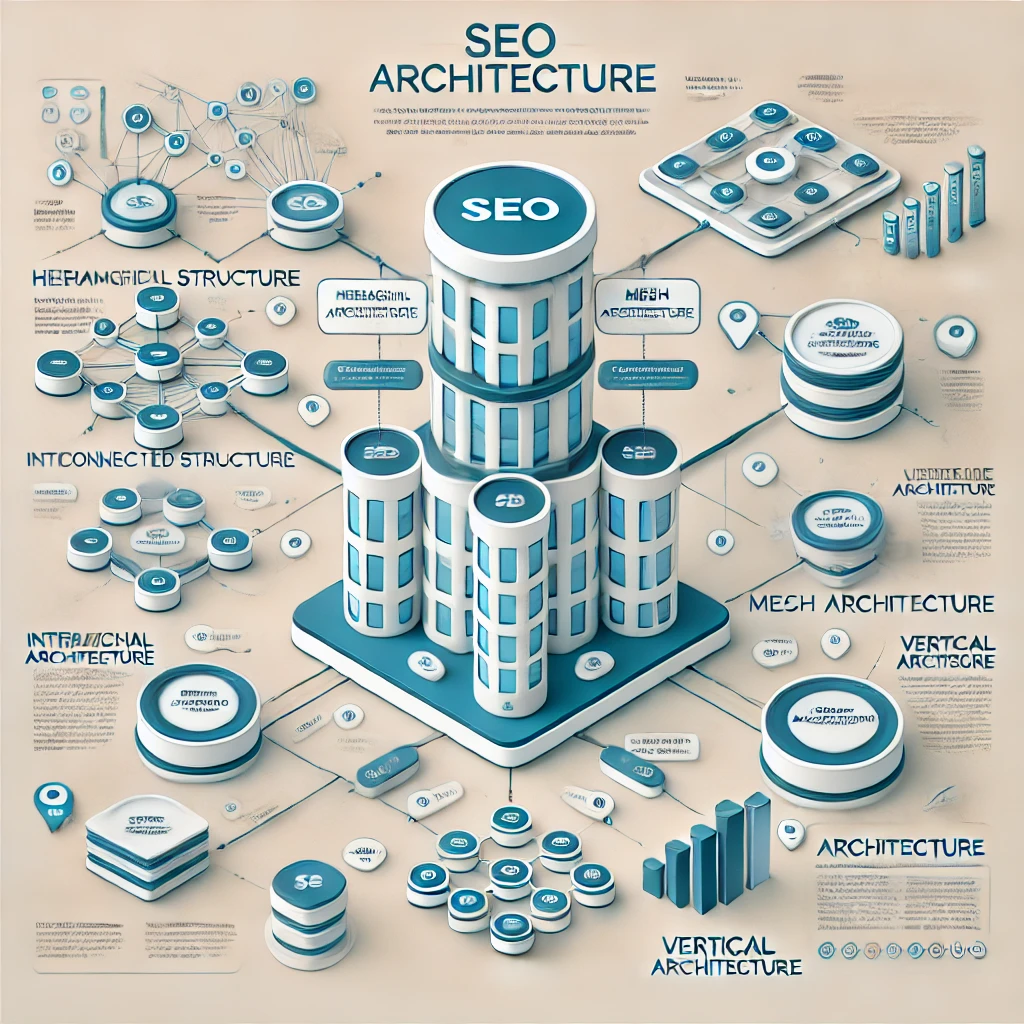
Web architecture can be classified into different types according to hierarchy and links, adapting to the specific needs of each site. A bad choice can complicate navigation, while an adequate structure simplifies everything for users and search engines. Below, we explore the main types:
Hierarchical architecture:
This is the most widely used type and consists of a pyramid structure where the home page acts as the main point. From it, categories, subcategories, and individual pages unfold. A classic example is an e-commerce site: categories such as “Clothing” or “Electronics” link to specific products, ensuring clarity in navigation.
Vertical web architecture:
Here, content is organized in depth, ideal for specialized sites or those with extensive information. Pages are linked in such a way that the user navigates downward through more specific levels. It is perfect for educational blogs or sites focused on a very detailed niche.
Linear architecture:
It is used on small sites or those with a specific flow, such as tutorials or step-by-step forms. Pages are connected sequentially, guiding the user from one section to the next without distractions.
Mesh architecture:
This structure encourages internal links between pages, creating a robust network. It is useful for sites with a lot of related content, such as digital magazines or blogs. Internal links help distribute page authority, improving your SEO.
<!– wp:embed {"url“:”https://youtu.be/YGGBahexXYI?si=91lxiQPXxATton5n”,”type”:”video”,”providerNameSlug”:”youtube”,”responsive”:true,”className”:”wp-embed-aspect-16-9 wp-has-aspect-ratio”} –>SEO Architecture: How to achieve an optimized design?
An SEO architecture design combines logic and strategy to improve user experience and increase visibility on Google. If your goal is to rank, here are the keys to achieve it.
SEO architecture begins with identifying strategic keywords. By distributing these words in a balanced way throughout the content and creating effective internal links, your site becomes more Google-friendly. Also, consider using clean and descriptive URLs: a URL like “/types-of-web-architecture” is much more powerful than “/page123”.
The menu structure plays a crucial role. A well-designed menu allows users to reach any page in three clicks or less, facilitating both navigation and crawling by search engines.
Another essential aspect is internal links. For example, if you have an article about “types of web architecture”, linking it with another about “vertical web architecture” not only improves the user experience, but also helps distribute relevance among your pages.
Finally, don’t forget to optimize your site’s loading time. Google penalizes slow pages, so an efficient architecture includes compressed images and clean code to guarantee a fast and satisfactory experience.
Practical examples of well-designed SEO architecture
Examples of well-executed SEO architecture are those that balance functionality and visibility, providing a smooth user experience. Here are some inspiring cases.
A successful example is Amazon. Its hierarchical structure allows users to filter products by categories, subcategories, and specific attributes. Additionally, the use of internal links between related products maximizes their positioning.
Wikipedia is another exemplary case. It uses a mesh architecture, linking related terms within its articles, which not only improves navigation but also its relevance in searches.
Finally, educational blogs like HubSpot stand out for their vertical web architecture. Each article is interconnected by topics and deeper guides, offering a comprehensive learning experience.
Why choose vertical web architecture for your project?
Vertical web architecture is ideal for sites with specialized information that require depth in content. This approach prioritizes the organization of topics into detailed levels, guiding the user toward more specific content.
Imagine a travel site. Instead of listing destinations at random, vertical architecture organizes pages by regions, countries, and cities, making it easier for users to find what they are looking for. Additionally, this type of structure improves user retention by offering additional content of interest.
For search engines, vertical architecture simplifies crawling, since pages are organized logically. Google rewards this clarity, increasing your site’s visibility.
It doesn’t matter whether you manage a blog, an online store, or an informational portal, this approach guarantees optimal navigation and better SEO performance.
SEO Architecture: Examples that stand out for their effectiveness
What is a good example of SEO architecture?
A good example of SEO architecture is a hierarchically organized site with effective internal links, clear URLs, and optimized navigation. This design allows users and Google to find content efficiently, improving positioning.
Having a solid SEO architecture is not just about how a website looks, but about how it works from within. Below, I show you some real and practical examples of SEO architectures that make a difference in positioning and usability.
Case 1: Amazon and its hierarchical architecture
Amazon uses a hierarchical architecture that begins on its homepage and branches into categories, subcategories, and specific products. This not only makes it easier for users to quickly find what they are looking for, but also allows Google to understand the relationship between pages. Each product is linked to related pages, which improves navigation and reinforces SEO.
Case 2: Wikipedia and its mesh architecture
Wikipedia is a perfect example of mesh architecture. Within each article, there are internal links to other relevant topics, forming a robust network of related content. This not only keeps users on the site longer, but also ensures that each page receives authority from internal links, something essential for improving search engine rankings.
Case 3: HubSpot’s blog and its vertical architecture
HubSpot’s blog organizes its content vertically, grouping articles into thematic “pillars.” For example, a pillar about marketing can link to articles about SEO, social media, and content strategies. This vertical approach guides the user through deeper levels of information, while distributing relevance among related pages.
Case 4: E-commerce with filters and smart links
Many e-commerce sites, such as Zalando, take advantage of a hierarchical SEO architecture combined with optimized filters. When selecting a category, such as “shoes,” the user can filter by brand, size, or color. Additionally, each option generates a friendly URL such as “black-mens-shoes,” which improves both navigation and SEO.
Case 5: Specialized forums and their categories
Forums like Reddit, although they have a more informal design, stand out for their optimized SEO architecture. Their subcategories (“subreddits”) are clearly defined and organized, facilitating both content exploration by users and Google crawling. Each topic is linked to other related ones, forming a fluid browsing experience.
Key elements these examples have in common
- Strategic internal links: They help the user and distribute authority.
- Clear structure: It facilitates access to content in just a few clicks.
- Optimized URLs: Clear, descriptive, and easy to index.
- Relevant content: Related and grouped logically.
Creating an SEO architecture like the ones in these examples not only optimizes the user experience, but also ensures a well-positioned site in search results.
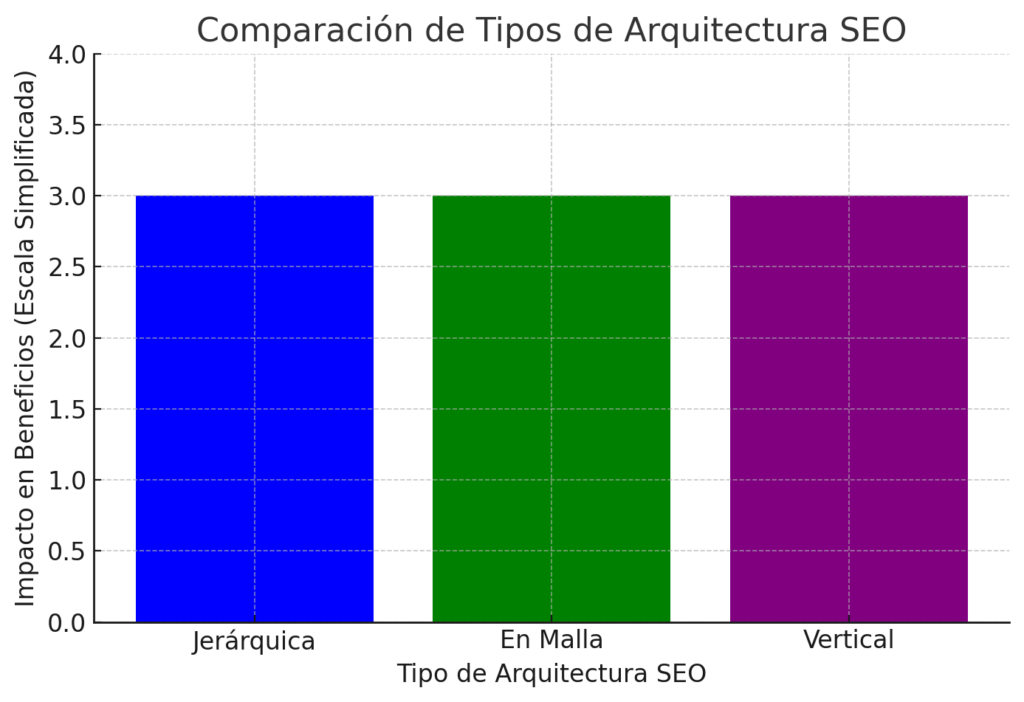
| Type of SEO Architecture | Characteristics | Main Benefits |
|---|---|---|
| Hierarchical | Organizes content into levels from the main page to sublevels (categories and subcategories). | Facilitates navigation and crawling by search engines. |
| Mesh | Creates a network of internal links between related pages, distributing authority. | Improves user experience and positioning thanks to internal links. |
| Vertical | Prioritizes thematic depth with content organized into specific levels. | Ideal for specialized sites with deep and hierarchically organized content. |
What is web architecture?
Answer: Web architecture is the structure or design of a website, which includes the organization of its pages, navigation, and content structure. A well-organized design improves the user experience and is crucial for SEO.
Why is web architecture important for SEO?
Answer: Good web architecture facilitates the indexing of pages by search engines, which improves the site’s visibility. It also helps users find content easily, which reduces the bounce rate and improves retention.
How does navigation influence web architecture for SEO?
Answer: Clear and easy-to-use navigation allows search engines to crawl and better understand the site’s structure. Additionally, well-designed navigation improves the user experience and reduces the bounce rate.
What is information hierarchy in web architecture?
Answer: Information hierarchy is the organization of content on a website, generally in the form of categories and subcategories. Establishing a clear hierarchy facilitates navigation and improves SEO, since search engines value organized structure.
What is a sitemap and how does it help SEO?
Answer: A sitemap is a file that lists all the important pages of a website. It helps search engines crawl the site’s pages more efficiently, thereby improving indexing and SEO.
What is internal linking and how does it benefit SEO?
Answer: Internal linking is the practice of linking pages within the same website. It improves site navigation, distributes page authority (link juice), and facilitates the indexing of pages by search engines.
What is mobile optimization in web architecture?
Answer: Mobile optimization refers to creating a web design that adapts correctly to different screen sizes, especially on smartphones. Google values mobile usability as an important ranking factor.
What is loading speed and how does it affect SEO?
Answer: Loading speed is the time it takes for a web page to load completely. Slow loading can negatively affect SEO, since users quickly abandon slow sites, and Google prioritizes fast sites in its results.
How does structured URL influence web architecture for SEO?
Answer: A well-structured URL is easy to read for users and search engines. Including relevant keywords in URLs helps improve SEO and makes it easier for search engines to understand the page’s content.
What are redirects and how do they affect SEO?
Answer: Redirects are changes to a page’s URL. If not implemented correctly, they can lead to a loss of page authority. Using permanent 301 redirects helps maintain SEO when moving content from one page to another.
What is “Crawl Budget” and how does it affect website architecture?
Answer: Crawl Budget is the amount of time search engines spend crawling a website. An efficient website architecture helps optimize this budget, allowing the most important pages to be crawled more frequently.
How does duplicate content affect website architecture and SEO?
Answer: Duplicate content can confuse search engines and split authority across multiple pages. It is important to have a website architecture that minimizes duplicate content and uses canonical tags to signal the preferred version.
What are canonical tags and how do they help SEO?
Answer: Canonical tags indicate the preferred version of a page when there is duplicate content. This helps consolidate page authority and prevents penalties for duplicate content.
What is a “Breadcrumb” and why is it important for SEO?
Answer: Breadcrumbs are a form of navigation that shows a page’s location within the site hierarchy. They help users navigate the site easily and improve page indexing by making its structure more understandable to search engines.
How does website architecture influence site security and SEO?
Answer: A secure website (HTTPS) is crucial for both user experience and SEO. Google favors sites with HTTPS and considers security a ranking factor.
What is SEO-friendly URL design?
Answer: An SEO-friendly URL is short, descriptive, and contains relevant keywords. This makes it easier for search engines to understand the page content and improves ranking.
What is a “404 error” and how does it affect website architecture?
Answer: A 404 error occurs when a page is not found on the site. It is important to minimize 404 errors because they can negatively affect user experience and site indexing. Properly redirecting missing pages is essential for SEO.
How does website architecture influence bounce rate?
Answer: A good website architecture that offers intuitive navigation and easy-to-find content can reduce bounce rate, which improves SEO. Search engines value user retention.
What is responsive design and how does it improve SEO?
Answer: Responsive design is one that automatically adapts to the device screen size. Google prefers sites with responsive design, as it improves user experience and ensures that content is accessible from any device.
How does website architecture optimization help conversion and SEO?
Answer: A well-optimized website architecture improves usability and user experience, which can increase conversion rates. At the same time, an optimized user experience can reduce bounce rate and improve SEO.