
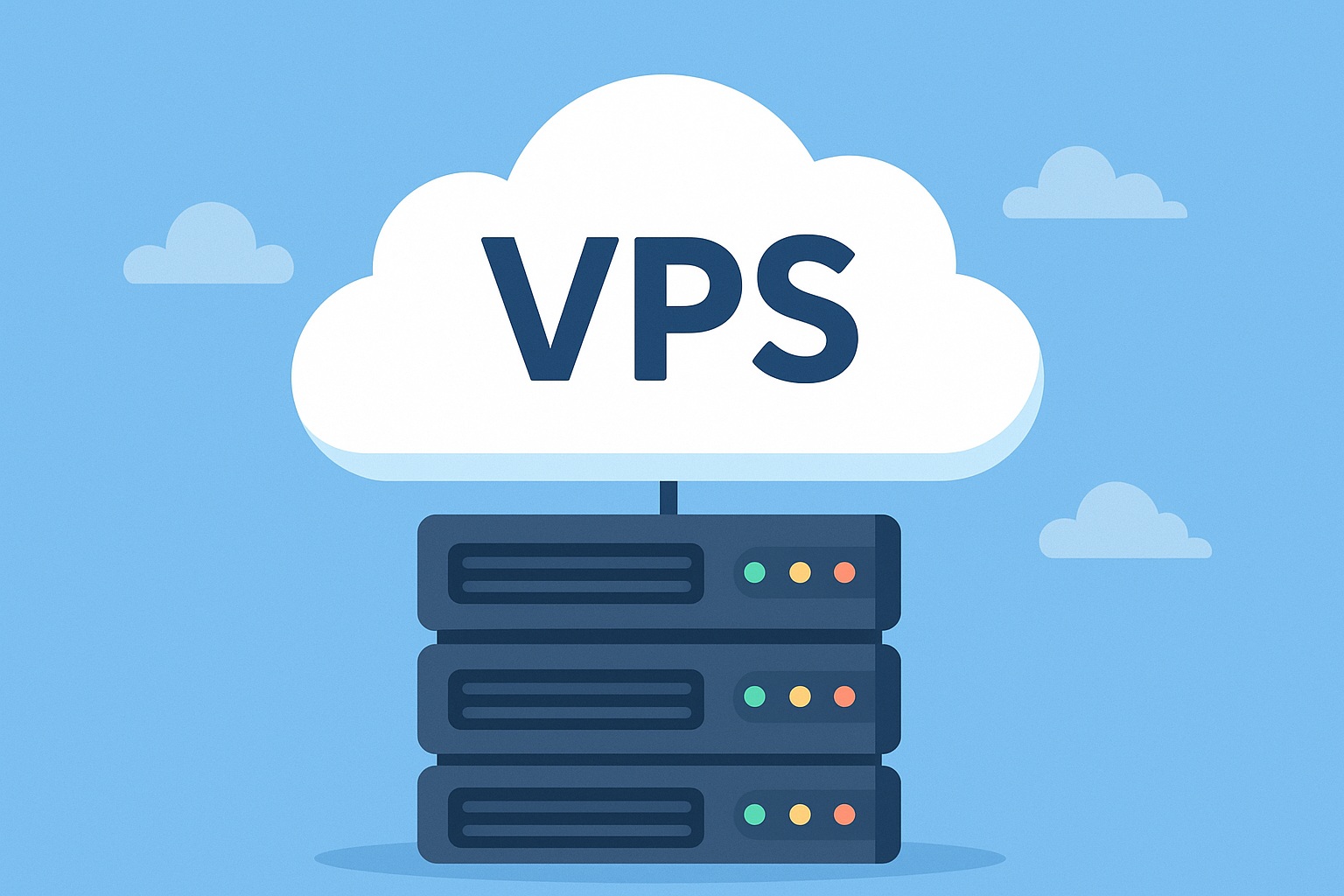
Discover the best VPS hosting services and their costs. We reveal the REAL advantages and disadvantages of a cloud VPS server. Your definitive guide for 2025!
A few days ago, while browsing a developers’ forum, I came across a thread that had hundreds of comments. Truly frustrated people. The topic: choosing a server. One told how he had lost data, another how an invoice ruined his month, and several more didn’t understand the difference between one plan and another. That’s when I realized that, with all the information out there, what’s missing is clarity. This isn’t for experts, it’s for anyone looking for a real solution. So I set out to research thoroughly to unravel the world of VPS.
What is a VPS, really?
Theory tells you it’s a Virtual Private Server. Sounds technical and complicated, right? But in practice it’s much simpler. Imagine an apartment building. A shared server would be one huge room where everyone lives and sleeps together. If your neighbor throws a party, you can’t sleep.
A VPS is like having your own apartment inside that same building. You have your private space, with your own walls, your key, and your bathroom. Your resources are yours alone. No one else can use them, and what you do inside your walls doesn’t affect others. This means your website won’t slow down because another user has a sudden traffic spike.
The key lies in virtualization technology, which divides a powerful physical server into multiple independent “virtual machines.” Each one runs its own operating system and reboots independently. It’s the ideal middle ground between cheap shared hosting and the very expensive dedicated server.
The advantages and disadvantages you should know
Like everything, it’s not perfect. It has brilliant things and others that can be a headache if you’re not prepared. It’s not a magic solution, but a tool with a very specific purpose.
Let’s start with the good: control is absolute. You can install whatever software you need, configure security to your liking, and have predictable performance. Scalability is also a strong point; if your project grows, you can add more RAM or CPU many times without migrating to another machine. And, of course, security is infinitely superior to a shared plan.
Now, the not-so-good: the price. Obviously it’s more expensive than shared hosting. But the biggest drawback isn’t the cost, but the management. An unmanaged VPS means you are the system administrator. You have to handle security updates, patches, backups, and solve any technical problem that arises. If you don’t have this knowledge, it can become a nightmare.
An honest look at VPS costs
This is where many get a surprise. Seeing a price of $5 a month and thinking it’s a bargain. The reality is that this plan is usually so basic that for a serious project it falls far short. Prices that are real and useful usually start in the range of $20 to $40 per month for a decent configuration.
But beware, the base price is only one part. There are hidden costs that people don’t consider. Is the server in your region? If not, it may have high latency. Are backups included or are they an extra? What happens if you exceed the bandwidth? Do they charge you for it or do they simply cut off your service? I’ve read reviews from users who ended up paying double in months of high activity for these reasons.
The most sensible thing is to calculate a budget 30% higher than the advertised price to cover these unforeseen events or additional services that, sooner or later, you will need.
Why is a cloud VPS server the trend?
The traditional concept of VPS, with a single physical server, is being replaced by a more robust idea: the cloud VPS. The difference isn’t just in the name. While a normal VPS depends on a single physical machine, a cloud VPS runs on a network of interconnected servers, a cloud.
This solves the single point of failure. If the physical server of a traditional VPS goes down, your website goes down with it. In a cloud environment, if one node fails, your resources are automatically redistributed to another server in the network, keeping your project online. Scalability is also instant; adding resources can be a matter of clicks and minutes, not hours.
For any project that needs high availability and flexibility, this already seems to be the mandatory option, leaving classic VPS for very specific tasks.
The best VPS hosting services for 2025
Based on the analysis of comparisons, performance tests and, above all, on the comments and complaints of real users in forums and social media, the outlook for this year is clear. There is no “best for everyone,” but rather the “best for each case.”
For those who prioritize simplicity and support, there are options that offer an intuitive control panel and fantastic management, ideal for those who aren’t sysadmins. For those looking for raw performance and tight pricing, there are other companies that offer brutal machines, but where you’re expected to know your way around the terminal.
The most repeated trend is the focus on the end-user experience, simplifying processes that were previously technical. Automated backups, firewalls configurable from a dashboard, and 24/7 support that actually solves problems are the factors that are making the difference between those who lead and those who fall behind. The final choice, in the end, depends on what you’re building.
Comparison Table: Best VPS Services for 2025
This table is based on the analysis of trends, performance, prices and, above all, on the experience and complaints of real users in forums and technical communities.
| Provider | Featured Plan | Approx. Price (month) | Ideal for… | Key Advantage | The “Catch” or Difficulty |
|---|---|---|---|---|---|
| DigitalOcean | Basic Droplet | $6 – $40 | Developers and startups. | Extreme simplicity, robust API, excellent documentation. | Priority support is paid. High cost of excess data transfer. |
| Linode (Akamai) | Shared CPU | $5 – $40 | Balance between price and performance. | Great value for money, generous bandwidth included. | Interface can feel a bit outdated compared to rivals. |
| Vultr | Cloud Compute | $6 – $40 | Those seeking location flexibility. | Wide range of global locations and hardware types (AMD/Intel CPU). | Performance consistency can vary slightly between nodes. |
| Hetzner | Cloud CX | ~€5 – €30 | Tight budgets in Europe. | Incredibly competitive prices with high-quality hardware. | IP assignment can be a manual process. Very “unmanaged” approach. |
| AWS | Lightsail | $3.5 – $40 | Those who already use or plan to use the AWS ecosystem. | Perfect integration with other AWS services (S3, CloudFront, etc.). | Billing for other services can get complicated and drive up the total cost. |
| Kamatera | Cloud VPS | $4 – $100+ | Projects requiring high customization. | Total flexibility to configure CPU, RAM, and storage. | The management interface has a steep learning curve. |
| IONOS | VPS | $2 – $30 (first year) | Small businesses and beginners. | Aggressive introductory prices, phone support included. | Prices renew at a much higher rate after the promotional period. |
Comparison Conclusion
- For the Experiment or Personal Project: Hetzner or the IONOS plan (being aware of the renewal price) are unbeatable in price.
- For the Developer or Technical Startup: DigitalOcean or Linode offer the best user experience and tools.
- For Specific Hardware/Location Needs: Vultr and Kamatera provide flexibility that is hard to match.
- For Integration with a Larger Ecosystem: AWS Lightsail is the logical option, but keep a close eye on billing.
⚠️ Remember: The real “VPS cost” almost always includes extras. Always factor in the price of automated backups, snapshots (system images) and a managed firewall. These are usually add-ons that separate a good service from an excellent one and protect your real investment.