
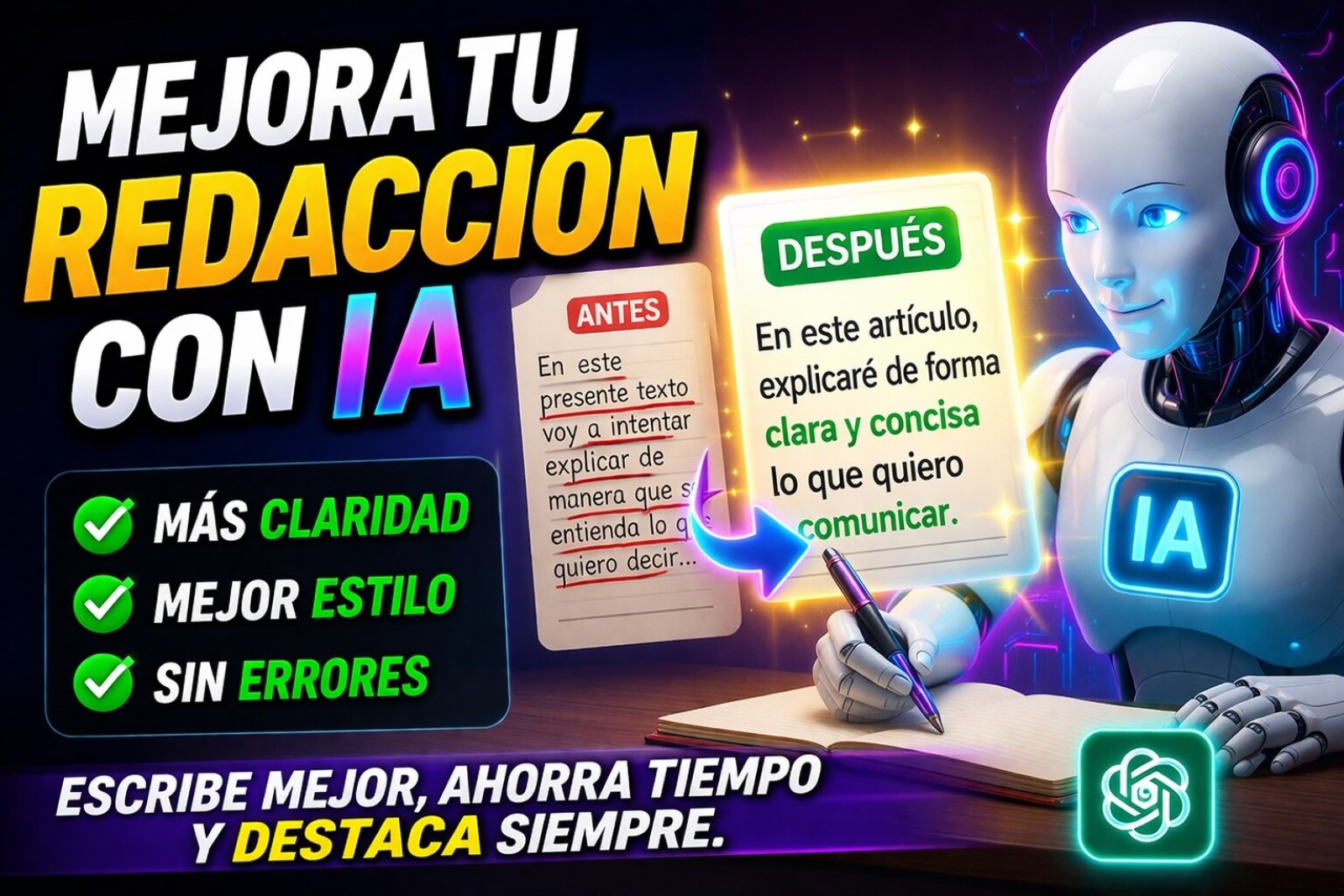
Okay, now that we’ve made it clear that AI is a companion, not a substitute, it’s time to talk about who you’re going to have those metaphorical beers with. Because the market is packed with options, but not all of them are good for the same thing.
The all-rounders (the ones you use for everything):
- ChatGPT and Claude: They’re the heavyweights. They don’t just generate, they understand context like no one else. I use them to get unstuck when I’m staring at a blank page. I tell them: “I need to talk about [topic], but I don’t know where to start. Give me 5 different angles: one ironic, one technical, one personal, and one that’s scary.” And just like that, I’ve got a runway to take off from.
- ChatGPT Work (the new thing): Just a few days ago, OpenAI launched a version specifically for work that promises to be a game-changer. It’s not just a chat, it’s an assistant that connects to your apps (over 1,400 add-ons) and can turn your notes into documents, spreadsheets, or even web apps autonomously. The idea is that you give it a draft and it turns it into a finished piece of work all by itself. I’m still testing it, but it looks like it could be a lifesaver for those of us who hate making presentations.
The specialists (the ones that fine-tune your phrasing):
- Wordtune: This is my favorite for everyday use, and I mentioned it earlier. It doesn’t rewrite the whole paragraph, it gives you options sentence by sentence. It’s like having a friend next to you who says, “hey, you could also say it like this.” And you decide if you like it or not. It’s less invasive than others.
- The winning combo: Most professionals in marketing already use AI daily, especially for writing copy, planning, and data analysis. It’s not that it’s the future, it’s that it’s already the present. Using it for repetitive tasks frees up time for what really matters: thinking and creating.
The ones I don’t use (and why):
- “One-click full article generator” type tools. They work if you want to fill an affiliate blog with soulless content, but for building a personal brand, I recommend you avoid them. They sound like an instruction manual translated with Google. In fact, 52% of marketing professionals already see content saturation as the main challenge. More isn’t better; it’s more noise.
AI in content marketing
This is where things get interesting. Because content marketing is no longer “publish a post every two weeks.” Now it’s a game of data and personalization, and AI is the one carrying the ball. According to recent studies, AI has established itself as the number one topic in marketing, leaving behind concepts like storytelling or brand management .
What’s changing the game:
- AI agents: We’re no longer just talking about chatbots. We’re talking about AI agents that can manage complete customer interactions, from notifications to personalized recommendations. This is changing marketing from being a matter of channels to being a matter of “managing intent.” In other words, AI understands what the customer wants before they even know it themselves.
- Augmented humanity: It sounds like science fiction, but it’s a 2026 trend. It’s about using AI to enhance human creativity, not replace it. It combines data with intuition and cultural sensitivity. Because AI can tell you what works, but only you know why it resonates with your audience.
- Predictive content: Imagine campaigns that anticipate the user’s needs before they express them. That’s already possible thanks to models that analyze behavioral patterns. The key is to execute it well so it doesn’t feel invasive.
Text generation with artificial intelligence
Generating text with AI is easy. Generating text that someone wants to read to the end, that’s another level. Generation has evolved enormously, and today we have two main approaches.
Instruction-based generation (prompting): This is what we do when we tell ChatGPT “write me a 500-word post about X.” The result is correct, but bland. It’s fine for an initial draft, but not for publishing.
Context-based generation (RAG – Retrieval Augmented Generation): This is the good stuff. It involves uploading your own documents, your previous articles, your notes, even your emails to the AI. And then you tell it: “Generate a text about this new topic, but using the style and examples you have in these files.” Tools like Notion AI or Claude Projects do this very well. The result isn’t generic, it’s an extension of you.
The hybrid approach (what works): Excellence in content creation is no longer 100% human or 100% AI. It’s a hybrid strategy where AI gives you efficiency and the draft, and you add the strategic perspective, the voice, and the judgment. Because AI can generate a thousand ideas, but only you know which one is the right one for your brand.
My current workflow for generating texts:
- Brainstorming with AI: I ask for 30 headlines, discard 25, and keep 5.
- Structure by hand: I take the chosen headline and make an outline on paper (yes, on paper). AI helps me organize ideas, but I set the structure.
- Raw writing: I write without filters, as if I were telling a friend about the topic on a terrace.
- Assisted generation: I hand my text to the AI and ask it to give me three versions of each paragraph. I take the best of each one and mix it with mine.
- Final editing: That’s where the real work is, and I talk about that further down.
The typical mistake is skipping steps 2 and 3. If you ask AI to do the structure AND the content, the text is going to taste like AI. The essence has to be yours, and the form comes from it.
Best AI spelling and grammar checkers
Okay, let’s talk about proofreading. Because yes, AI is a machine for finding misplaced commas and forgotten accents. But not all checkers are the same.
The king of grammar: Grammarly. It’s still the best at catching grammatical and punctuation errors in English. For Spanish, it has improved, but it’s not perfect. I use it to review my emails in English and the occasional post I translate. Its strong point is that it explains why something is wrong, not just corrects it.
The best for Spanish: LanguageTool. It’s open source and has a very powerful free version. It catches errors that others overlook, like confusion between “por qué” and “porque,” or “a ver” and “haber.” It also integrates with Google Docs and works like a charm. For writing in Spanish, it’s my default option.
The one that surprised me: QuillBot. It doesn’t just correct, it gives you rewriting options. It’s a hybrid between a checker and a paraphraser. I use it when I have a sentence that sounds weird to me but I don’t know why. I hit “rephrase” and it offers alternatives that, even if I don’t use them directly, help me find the solution.
My trick with checkers: I never accept the first suggestion. If the checker tells me to change “usar” to “emplear” and I know that “usar” is my word, I keep it. The checker is there so I don’t miss a typo, not to homogenize my vocabulary. That’s why, even though I use AI to proofread, I always do a final read-aloud. If it sounds like a robot, I change it.
AI for SEO
SEO is dead. Long live AI SEO. Because before you optimized for Google, and now you have to optimize for an AI-driven search ecosystem. Language models like ChatGPT, Perplexity, or Claude are now a new “reader” of your website, and you have to make sure they understand you.
The new paradigm: from SEO to GEO (Generative Engine Optimization): It’s no longer enough to appear on Google. Now you have to appear in the answers given by AI models. 80% of what you do for SEO already helps you with AI, but there’s an extra 20% that makes the difference. For example, using “Answer Capsules”: answering questions directly right after an H2 heading. 72.4% of posts cited by LLMs use this technique.
Optimization for the machine (and for the user): AI systems don’t read your website like Google does. They don’t render JavaScript the same way, so if your key content is in JS, they might not even see it. What works now is:
- Atomic content: Each paragraph should focus on one clear idea so the AI can isolate it and use it in an answer.
- Structured data (Schema Markup): Using JSON-LD is almost mandatory. AI models improve their information extraction from 16% to 54% when well-placed structured data is present.
- Constant updating: Recent content (less than 3 months old) is 3 times more likely to be cited by AI.
The human factor (E-E-A-T): AI doesn’t just evaluate your text, it evaluates your entity. The authority of your brand or your name is key. Your brand’s search volume is the main predictor of being cited in LLMs. That’s why having a presence in the media, being consistent on social media, and having a well-crafted “about me” page is more important than ever.
Content automation with AI
Automating doesn’t mean “publishing without touching it.” It means “letting the machine do the heavy lifting while I do the creative work.” And this is where I’ve found the perfect balance.
What I automate:
- Summary generation: For my social media, I hand the full article to the AI and ask it to generate 5 Twitter threads, 3 LinkedIn posts, and 2 Instagram posts. Then I edit them, but the base structure is already there.
- Newsletter creation: I use AI to extract the key ideas from my content of the week and generate a newsletter draft. Then I add the personal part, the jokes, and the anecdotes.
- Content maintenance: 80% of the work of keeping an old blog updated (updating figures, dates, examples) I can already do with AI. An AI agent can review my content and tell me what needs updating. It’s like having an automatic editor that never forgets anything.
What I DON’T automate:
- The first draft of an important article. That’s mine and no one else’s.
- Replies to clients or collaborators. That’s where my voice goes unfiltered.
- Posts where I give my opinion on controversial topics. AI doesn’t understand emotional nuances.
The danger of mass automation: If you publish AI-generated content at scale without review, traffic may go up at first and then collapse. Google and other engines detect whether users interact well with your content. That’s why the rule is clear: AI generates, the human reviews. Always.
Differences between human and AI writing
Here we get to the heart of it. Because if you don’t understand this, you’ll keep fighting with the machine. I’ve been mulling it over and, for me, the key differences are these:
AI is a summary; the human is an experience.
AI generates text from patterns. It knows that after “on the other hand” usually comes a counterargument. But it doesn’t know what it feels like to lose a client or to close a 10,000-euro sale. Human text tells that story, even if the grammar is imperfect.
AI is predictable; the human makes mistakes with grace.
When I write, I sometimes throw in a phrase that comes out of nowhere, or repeat a word three times in two lines. That “imperfection” is what gives the text rhythm. AI smooths everything out. And smoothed-out text, though pretty, is boring. In a world where AI produces infinite content, the real value lies in authenticity and in the ability to connect with authentic human movements.
AI has no opinion; the human does.
Ask AI to give you a controversial opinion on a topic. It’ll give you a neutral, balanced text. The problem is that neutrality doesn’t engage. When I write, I have opinions. I take a stance. I say that email marketing is still better than Instagram, and if someone disagrees, let them argue with me about it. That generates conversation. AI generates conformity.
AI writes for everyone; the human writes for one.
When I write, I think of a specific person. My client María, who has a small business and is fed up with being sold smoke. I talk to her. AI writes for an “average reader” who doesn’t exist. That’s why its texts are so flat. In fact, one of the big trends of 2026 is that the saturation of generic content makes professional and cultural judgment a key asset. Brands gain relevance not by producing more, but by knowing which messages add real value.
My golden rule: AI drafts; the human writes. Drafting is putting words in order. Writing is putting emotions in order. And emotions, for now, are still ours.
So if you see that your texts all come out the same, turn off the “magic rewriter” and start giving it orders. Treat it like an intern you have to explain even how to load the washing machine. At first it’ll be hard, but once you get the hang of it, you’ll be amazed at what you can get out of it without ceasing to be yourself.
Summary for those in a hurry:
- AI doesn’t write for you, it writes with you. Excellence lies in the hybrid approach.
- Use specific tools for each task (don’t use a hammer to screw in a screw). 76% of professionals already use AI daily.
- Automate the repetitive, but never the first draft or the opinion.
- Always review. The final 20% is what sets an AI text apart from a text with soul.
- If it sounds like AI, delete it and rewrite it in your own words. Think about GEO and how AI models see you, but never lose your voice.
And the best advice I can give you: Write first as if AI didn’t exist. Then bring it in to polish, to expand, to mull things over. But never, never let it have the first word. The first word always has to be yours.