
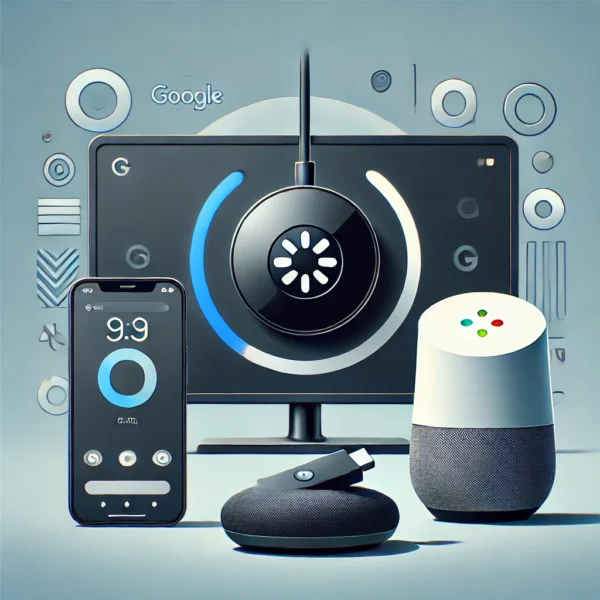
The whole world is affected! Google’s service is suffering a massive outage. Chromecast stopped working. Come in and check THIS out now.
I recommend you read this interesting article: How to check a website’s traffic directly.
Chromecast Outage: Did It Happen to Everyone?
If you were trying to relax watching your favorite series this weekend, you may have gotten an unpleasant surprise. Suddenly, without warning, the screen froze or that dreaded reconnection icon appeared that led nowhere.
You weren’t the only one. You open Twitter (now X) and the first thing you see is that the topic is on fire. Thousands of people reporting exactly the same thing at the same time. It’s in those moments when you realize that something big is happening.
The frustration is immediate. You restart the router, restart the TV, unplug and plug the Chromecast back in… but nothing. The problem was clearly much bigger than your home connection. It was one of those times when the problem isn’t yours, but the service’s.
The Great Google Outage
On Thursday night, users around the world began to report that their devices stopped working suddenly. It didn’t matter what generation the device was or which country they were trying to connect from. The failure was widespread and pointed directly at the servers.
The curious thing about this Google outage was that not all of its services were affected equally. While Gmail or the Search engine remained operational, the Google Home and Chromecast ecosystem was practically unusable. This shows how complex and segmented the infrastructure of a tech giant really is.
Shortly after, service monitoring portals like Downdetector recorded a historic spike in reports. The graph shot up vertically, confirming what everyone suspected: it was a massive interruption. Not only could people not stream, but the assistants weren’t responding either.
Chromecast Stopped Working Around the World
The phrase “everyone” may sound like an exaggeration, but in this case it wasn’t. Reports came in from the United States and Mexico all the way to Spain and Australia. It was a true domino effect on a global scale that demonstrated our dependence on these technologies for daily entertainment.
Reddit forums filled up with threads of users looking for answers and solutions. “Does anyone else have their Chromecast down?” was the title repeated in different languages. The community became the best thermometer for measuring the true magnitude of the problem.
This global event highlighted a key problem: the lack of an offline mode or basic functionalities that don’t depend on the cloud. When the servers sneeze, all our devices instantly catch a cold, with no apparent remedy.
Was It a Google Service Problem?
In the end, everything pointed to a failure in a Google service critical for the authentication and communication of the devices. Some network experts suggested in their analyses that it could be an error in a software update or in the cloud infrastructure that manages these connections.
Hours later, the Google team confirmed through their service status that they had identified the problem and were working on a solution. It was the relief everyone was waiting for, an official confirmation that the problem was on their side and not the user’s.
This type of incident, although rare, reminds us that even the most reliable tech giants are vulnerable. A small error in a critical system can have a cascading effect that affects millions of people within minutes.
Was the Chromecast Outage Fixed?
Fortunately, after a few hours of anguish for Google’s engineering department, the service was fully restored. Devices began to reconnect gradually and life returned to normal in living rooms across half the planet.
The lesson that remains is clear: it’s always a good idea to have a plan B. Maybe a direct TV app or even having an HDMI cable on hand to connect your laptop directly to the TV. Because when the cloud fails, having local options can save your afternoon.
In the end, the incident remained as just another anecdote in the history of the internet. A reminder that in our digital, connected, and global era, sometimes the problem lies with “those upstairs,” and all we can do is arm ourselves with patience and wait for them to fix it.