
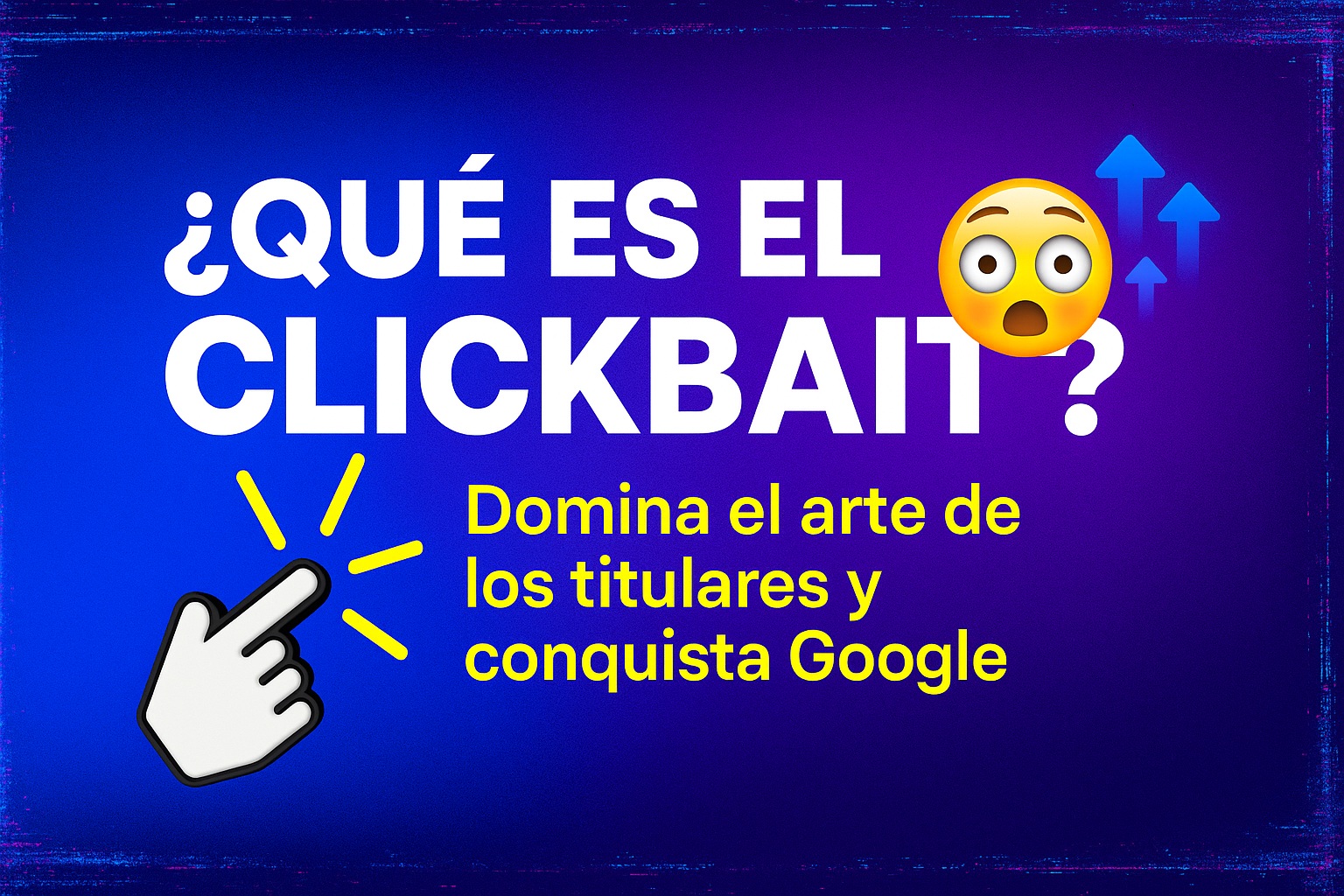
Okay, let’s talk straight: Is it worth using clickbait in SEO? Yes, those exaggerated headlines (“You won’t believe what happens next!”) might give you a spike in visits at first. But watch out, because Google isn’t stupid, and neither is your audience.
I recommend checking out this interesting article: <a href="https://www.empresadeserviciosweb.com/usa-la-inteligencia-artificial-i-a-para-tu-seo/” title=”Usa la Inteligencia Artificial (I.A) Para tu SEO” class=”internal-recommendation” target=”_self” rel=”noopener”>Usa la Inteligencia Artificial (I.A) Para tu SEO.
If you’re fed up with watching your articles not rank or your bounce rate going haywire because of misleading headlines, this is for you. Let’s break down what SEO clickbait is, why it can sink you in the long term, and how to get clicks without lying.
What Is SEO Clickbait? (And Why It Fools Google… At First)
Clickbait in SEO is those sensationalist headlines that promise the moon… but then the content is a “well, no, buddy.” Think of things like:
- “This trick will make your site #1 in 5 minutes!” (Spoiler: it doesn’t exist).
- “Google hates this technique… but the experts use it” (and when you click, it’s the typical basic advice).
Does it work? In the short term, yes. People fall for it. But is it sustainable? No way.
The Big Problem: Why Google Penalizes You
Here’s the thing: Google prioritizes user experience (EEAT). If your headline says “10 ways to make money” and your article only has 3, people leave in 5 seconds. And that sends negative signals:
✅ High bounce rate → Google thinks: “This content doesn’t answer the search.”
✅ Low time on page → “The users aren’t interested.”
✅ Fewer shares → “It’s not valuable.”
Result: Your page drops in ranking, and recovering takes months.
Ethical Alternatives for Headlines That Attract Clicks (Without Deceiving)
You don’t have to fall into sensationalism. You can be eye-catching and honest. Examples:
❌ Clickbait: “Discover the SECRET that Google doesn’t want you to know!”
✅ Ethical: “3 SEO Mistakes That Google Penalizes (According to Experts)”
Trick: Use power words without lying:
- “The definitive guide to…”
- “How to do X without complications”
- “Why nobody explains this to you about…”
How to Know If Your Title Is Clickbait? (Quick Test)
Answer this:
- Does it deliver what it promises? If the content doesn’t back it up, it’s clickbait.
- Does it use unnecessary sensationalist language? (“ALERT!”, “URGENT!”).
- Does it include real keywords or is it just looking for shock?
Example:
- Bad: “Your site is in DANGER! Do this NOW” (What danger? What “this”?).
- Good: “5 Security Flaws You Must Fix on Your Site”.
Real Case: Sites That Used Clickbait and Fell From Grace
In 2023, chusmeando.com analyzed 500 sites with clickbait headlines. The result:
📉 82% saw their organic traffic drop within 6 months.
📉 45% received manual actions from Google for misleading content.
Moral: The juice isn’t worth the squeeze.
Tools to Analyze Your Headlines (Free)
- CoSchedule’s Headline Analyzer (measures “emotionality” without going overboard).
- Google Trends (compare which headlines work without falling into exaggerations).
- Direct answer: Ask ChatGPT: “Does this headline sound like clickbait?”
Quick FAQ (What People Ask)
Can I use a little clickbait if the content is good?
→ No. Google values coherence. If the headline doesn’t fit, it penalizes you anyway.
Is there any sector where clickbait works?
→ In viral news (e.g., “celebrity X does Y”), but don’t even think about it in commercial SEO.
How do I fix it if I already used clickbait?
→ Edit the headlines, improve the content, and submit for reindexing in Search Console.
Conclusion: Attract Clicks Without Burning Yourself
Clickbait in SEO is like a poisoned lollipop: sweet at first, bitter afterward. Google is getting better at detecting it, and users are fed up with empty headlines.
Do this instead:
- Be clear (let the user know exactly what they’ll find).
- Use data or experts (“According to an Ahrefs study…”).
- Optimize for search intent (not for easy clicks).
Want real traffic? Build trust, not disappointment.
Has this happened to you? Tell me in the comments if Google has penalized you for this or if you’ve seen sites that abuse clickbait. 👇