

Content marketing is more than just a simple blog or publication. Mastering advanced content strategies, such as topic clusters and secondary intent analysis, is essential to stand out in a competitive environment. In this guide, we will explore how to implement these tactics on complex domains and how to multiply the impact of your content through scalable formats. Long-tail marketing as a content strategy. How to do a SERP Analysis using advanced tools.
I recommend you check out this interesting article: 📱 Hey Google, Set Up My Device Step-by-Step Guide 2025! ✅.
Advanced Implementation of Topic Clusters for Complex Domains
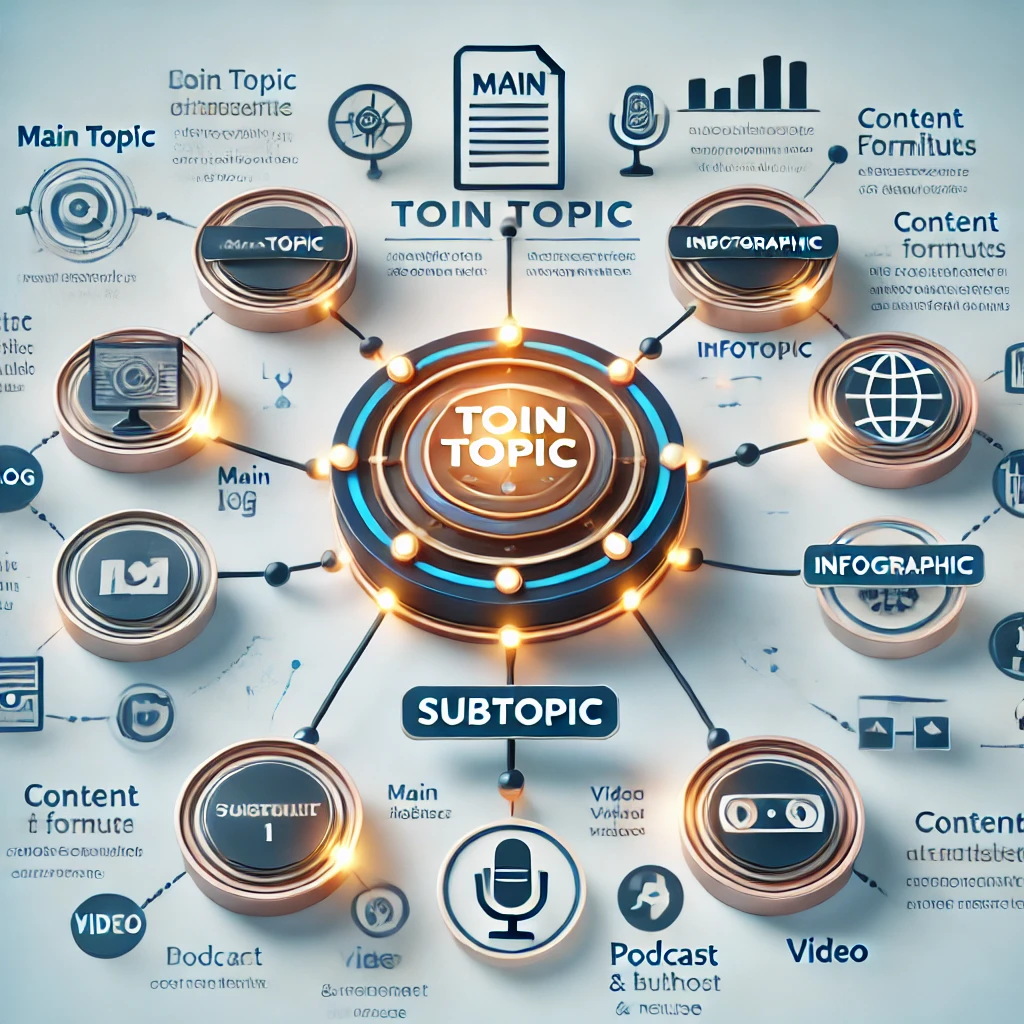
The topic cluster approach organizes content around a main thematic core and its related subtopics. This technique improves user navigation and site authority, key factors for SEO positioning.
What are topic clusters and why are they essential?
A topic cluster is a set of interconnected content pieces that revolve around a main topic. This approach is ideal for domains with multiple areas of specialization, as it:
- Facilitates the creation of topical authority in specific sectors.
- Improves dwell time on the site by offering relevant and related content.
- Optimizes search engine crawling through strategic internal links.
Example: If your domain focuses on technology, you can have a pillar on “Artificial Intelligence” and related clusters such as “Machine Learning,” “Natural Language Processing,” and “Neural Networks.”
Strategy for creating an efficient topic cluster
- Identify the pillar topic: Choose a broad topic that represents the main focus of your domain.
- Create specific subtopics: Dive deeper into related aspects, covering frequently asked questions and long-tail search terms.
- Interconnect the content: Use internal links to connect subtopics with the pillar content.
- Optimize with keywords: Integrate keyword variations such as synonyms, long-tail phrases, and related terms.
Recommended tools for managing topic clusters
- Ahrefs: To identify related keywords.
- SEMrush: To map topics and long-tail queries.
- Notion or Airtable: To visually organize clusters.
Complex domains, such as those in healthcare or finance, can benefit enormously from this methodology, as it allows users and search engines to easily navigate extensive areas of content.
Strategies for Creating Reusable and Scalable Content
Content repurposing not only saves time but also maximizes reach. A smart approach allows you to transform a single piece of content into multiple formats that impact different platforms and audiences.
Why bet on scalable content?
Creating scalable content is not just about saving resources, but about multiplying exposure. By repurposing content, you can:
- Reach audiences that prefer different formats (text, video, audio).
- Prolong the lifespan of your main ideas.
- Improve the ROI of every piece of content created.
Methods to scale content effectively
- Turn an article into a video: An informative article can become an explainer video for YouTube.
- Break up long content: Split an extensive guide into social media posts.
- Turn blogs into infographics: A graphic visualization can simplify complex topics.
- Create podcast episodes: Expand your reach by transforming articles into audio content.
Example: If you write about “SEO Strategies for SMBs,” you can turn it into an infographic for LinkedIn, a podcast episode for Spotify, and a short video for TikTok.
Benefits of format multiplication
- Greater visibility: You increase the chances of being discovered on different platforms.
- Audience diversification: Some users prefer to consume visual content, while others prefer audio or text.
- Brand consistency: You maintain an active and coherent presence without needing to constantly come up with new topics.
Use tools like Canva to design infographics, Descript to edit podcasts, and Lumen5 to turn text into animated videos.
Secondary Intent Analysis in Content
Secondary intent analysis is a strategy that allows you to optimize content to cover related terms or long-tail queries. This is key to better meeting user needs and attracting qualified traffic.
What is secondary intent?
Secondary intent refers to the complementary searches users perform when researching a topic. For example, someone searching for “How to make artisan bread” might also be interested in:
- “Easy recipes for beginners.”
- “Utensils needed for baking.”
- “Common mistakes when making bread.”
How to identify secondary intent
- Research related questions: Use tools like Answer the Public or Google’s “People also ask” section.
- Study long-tail queries: These reflect more specific needs and have less competition.
- Analyze the SERPs: Examine the best-ranked content to detect patterns in user interests.
Incorporating related terms
- Use frequently asked questions as subheadings in your articles.
- Dedicate sections to covering relevant tangential topics.
- Add practical examples that address implicit questions.
Benefits of covering secondary intent
- Better user experience: You provide complete and useful answers.
- Increased organic traffic: You capture less competitive searches.
- Reduced bounce rate: Users stay longer on your page if they find what they’re looking for.
Including these additional queries not only enriches your content but also improves its relevance to Google’s algorithms.
Conclusion: Integrate and Master These Strategies
The key to standing out in a saturated market is to implement a comprehensive approach. By combining advanced topic clusters, content scalability, and secondary intent analysis, you can build a digital ecosystem that attracts and retains quality traffic.
It’s time to optimize your content strategy! Take the time to plan and structure your content with these tactics, and watch how your rankings improve and your audience grows.