
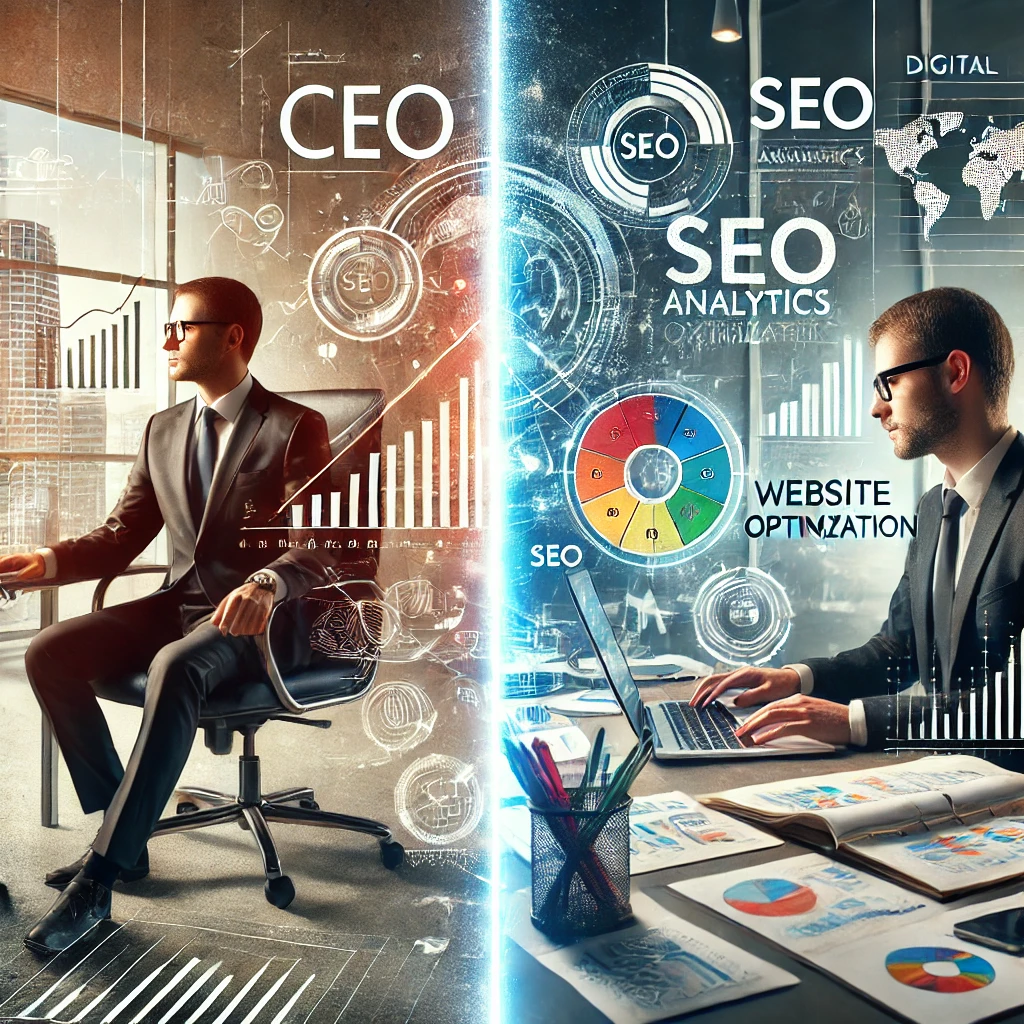
In 2026, authority in search engines is no longer earned with tactics, but with a solid and verifiable brand entity, a strategic asset that only the CEO can build .
In the constantly evolving digital landscape, a silent but crucial battle is being waged: the tension between executive vision (CEO) and the technical demands of search engine optimization (SEO). Traditionally, this dynamic has oscillated between the absolute control of one department over the other. However, in 2026, with the rise of generative Artificial Intelligence and answer engines, this relationship must transform radically. The question is no longer who is in charge, but how the CEO and SEO can merge their disciplines to build a digital entity that AI algorithms understand, cite, and recommend.
This article is not just a reflection; it is a strategic action framework. We will analyze survey data from more than 50 experts in the sector, break down the key trends for 2026, and provide you with a concrete model to align leadership with digital visibility .
1 The Paradigm Shift: From Keywords to Brand Entity
SEO is dead; long live AI SEO. This is not a mere technical evolution, but a philosophical shift in how systems discover and validate information. Google and its competitors no longer “read” web pages as collections of keywords. Instead, they interpret the web as a knowledge graph, mapping entities (your brand, your products, your authority) and the relationships between them .
1.1 The CEO’s Role: Architect of the Entity
This is where the CEO stops being a spectator and becomes the chief architect. Your brand’s “entity” on the web is built with:
- Consistent Value Proposition: Is it understood in 10 seconds what problem you solve and for whom?
- Verifiable Evidence: It is not enough to declare expertise; it must be demonstrated with detailed case studies, proprietary methodologies, and verifiable data .
- Unified Omnichannel Presence: Authority is fueled by what you publish on LinkedIn, in press releases, in communities, and in downloadable assets. Every signal must reinforce the same narrative .
Practical Example: A CEO of a fintech should not only drive the creation of a blog about financial education. They must ensure that the company’s ethical principles, its success stories with real clients (respecting privacy), and its team’s experience are the common thread of all content, from a webinar to a press report. This coherence is what algorithms identify as reliability.
1.2 The SEO’s Role: Translator and Amplifier
The SEO professional in 2026 evolves from technician to visibility strategist. Their mission is to translate that brand entity into signals that generative search engines (such as Google’s AI Overviews) can process:
- Optimization for Citation: Create content with a clear thesis from the first paragraph, simple definitions, and a scannable structure (H2, H3) that facilitates its extraction and citation by an AI .
- Decision Architecture: Content must cover the complete user journey: from the problem, through selection criteria and comparisons, to implementation and objections .
- Measurement of New KPIs: Success moves from “keyword ranking” to “share of answers” (share of answers). In how many questions related to your sector are you cited as a source?
A recent survey of 53 Spanish SEO experts confirms this shift: the priorities for 2026 are Digital PR, EEAT principles (Experience, Expertise, Authoritativeness, Trustworthiness), and content quality, leaving more traditional tactics such as indiscriminate link building in the background .
2 Comparison Table: CEO vs. SEO in the Age of AI SEO (2026)
| Dimension | CEO (Business/Leadership Focus) | SEO (Visibility/Technical Focus) | Optimal Collaboration Point |
|---|---|---|---|
| Primary Objective | Sustainable growth, profitability, market share, and brand building. | Visibility, qualified traffic, and presence in AI answers (not just clicks) . | Align business growth with organic demand acquisition and digital authority. |
| Key Metric (KPI) | ROI, LTV (Customer Lifetime Value), recurring revenue. | Presence in answers, mentions as a source, search intent coverage. | Conversions attributed to organic and quality of the generated pipeline. |
| Asset Being Built | Brand Entity: Reputation, trust, culture, unique value proposition. | Digital Entity: Knowledge graphs, content clusters, verifiable topical authority. | A unified entity where the commercial brand and digital presence are inseparable. |
| Decision Making | Based on the market, competition, internal capabilities, and long-term vision. | Based on search data, user intent, and SERP analysis (search engine results pages) . | Content and product decisions informed by search trends and real-time market feedback. |
| Risk of Ignoring the Other | Strategic invisibility: Creating an excellent product that no one searches for or finds. | Tactical relevance without direction: Ranking content that attracts traffic but does not contribute to business objectives. | Loss of market opportunities and waste of resources on disconnected efforts. |
3 Roadmap for Strategic Collaboration (2026)
Perfect synergy does not happen by accident. It requires an intentional process. This is a three-phase model to implement in your organization:
3.1 Phase 1: Diagnosis and Alignment (Quarter 1)
- Entity Audit: Conduct a joint analysis to assess how AI systems currently “see” the brand. Is there coherence between the commercial message and the online content?
- Intent vs. Offering Map: The SEO team must present to the CEO and the management team a map of the questions, needs, and decision criteria of potential customers (search intent) . Leadership must contrast it with the real value proposition.
- Define the “Authority Pillars”: Select 3 to 5 proprietary topics in which the company wants to be cited as an undisputed source. This must derive from a real competitive advantage.
3.2 Phase 2: Operational Integration (Quarter 2-3)
- Strategic Editorial Calendar: The content calendar must feed the authority pillars and reflect product launches, the CEO’s insights, and evidence from success stories.
- Evidence System: Create a centralized repository (customer videos, case studies, results data, certifications) that marketing and SEO can access to make content verifiable and “citable” by AI.
- Investment in Digital PR: As the expert survey points out, Digital PR is key. The CEO must open doors so that SEO and Communications can collaborate on securing media mentions that strengthen authority.
3.3 Phase 3: Measurement and Evolution (Quarter 4 onward)
- Unified Dashboard: Integrate business metrics (sales, leads) with AI SEO visibility metrics (mentions, share of voice in answers, cited pages).
- Strategic Quarterly Reviews: Meetings where SEO presents not only traffic, but which market questions are being answered, in which industry debates the brand has a voice, and how this translates into commercial opportunities.
- Data-Driven Agility: Use content gap analysis tools to quickly identify new search intents or emerging questions that the business can address with new content or adjustments to its offering.
4 Conclusion: Leadership Is the Best SEO Strategy
Ultimately, the question “CEO or SEO: who’s in charge?” is poorly framed. In the digital business of 2026, the one who truly “calls the shots” is the potential customer and their search intent. Google’s algorithm, increasingly intelligent, simply rewards brands that best satisfy that intent with authority and trustworthiness.
Therefore, the strategic answer is that the CEO must exercise leadership that enables SEO, and SEO must exercise expertise that materializes the CEO’s leadership into digital visibility. The CEO who understands that their discourse, their decisions, and the evidence of their company’s success are the primary fuel for modern SEO holds an unbeatable competitive advantage. The SEO who learns to translate technical complexity into strategic business implications becomes an indispensable ally in the boardroom.
The company that wins is not the one with the best technical SEO or the most visionary CEO separately, but the one that makes its vision and its visibility one and the same.
Does your strategy reflect the unique entity of your business, or are they two separate conversations? The time to integrate them is now.
Do you want to assess how answer engines currently perceive your brand’s entity? Let’s analyze one of your key pages together. Share the URL in the comments and I’ll give you a quick diagnosis based on the AI SEO principles discussed.