
In this article about Android Help: Using Quick Pairing and Voice Commands to Set Up Devices, we explore everything related to Android Help: Using Quick Pairing and Voice Commands to Set Up Devices. Discover the most important details below.
? Connect Bluetooth
Pair on Windows: Check that your PC has Bluetooth. Turn it on from the taskbar (icon Network/Sound/Battery) or in Settings > Devices > Bluetooth. Turn on your device (headphones, speaker) and put it in pairing mode (usually by holding down its Bluetooth button). On your PC, in the same Bluetooth settings, select “Add device” and choose it from the list. If you use Windows 11 and the device is compatible, a Quick Pair notification may appear to connect with one click.
Pair on Android: Swipe down the notification panel and hold the Bluetooth icon to open its settings. Tap “Pair new device” or “Link new device”. Make sure your Bluetooth device is turned on and in pairing mode. Select it from the list and follow the instructions (sometimes it asks for a PIN like 0000 or 1234).
The key difference: Pairing is linking devices for the first time (like adding a contact). Connecting is what you do afterward to use the device. Many reconnect automatically when they are nearby and turned on, but it sometimes fails if another device is already connected to them.
Exceptions: If the device does not appear, make sure your phone/PC’s Bluetooth and location are turned on (on Android this is usually required). Also check that the accessory is not already connected to another device. Some older equipment may use incompatible Bluetooth profiles and simply will not work.
?ᄌマ Set Up OK Google (Google Assistant)
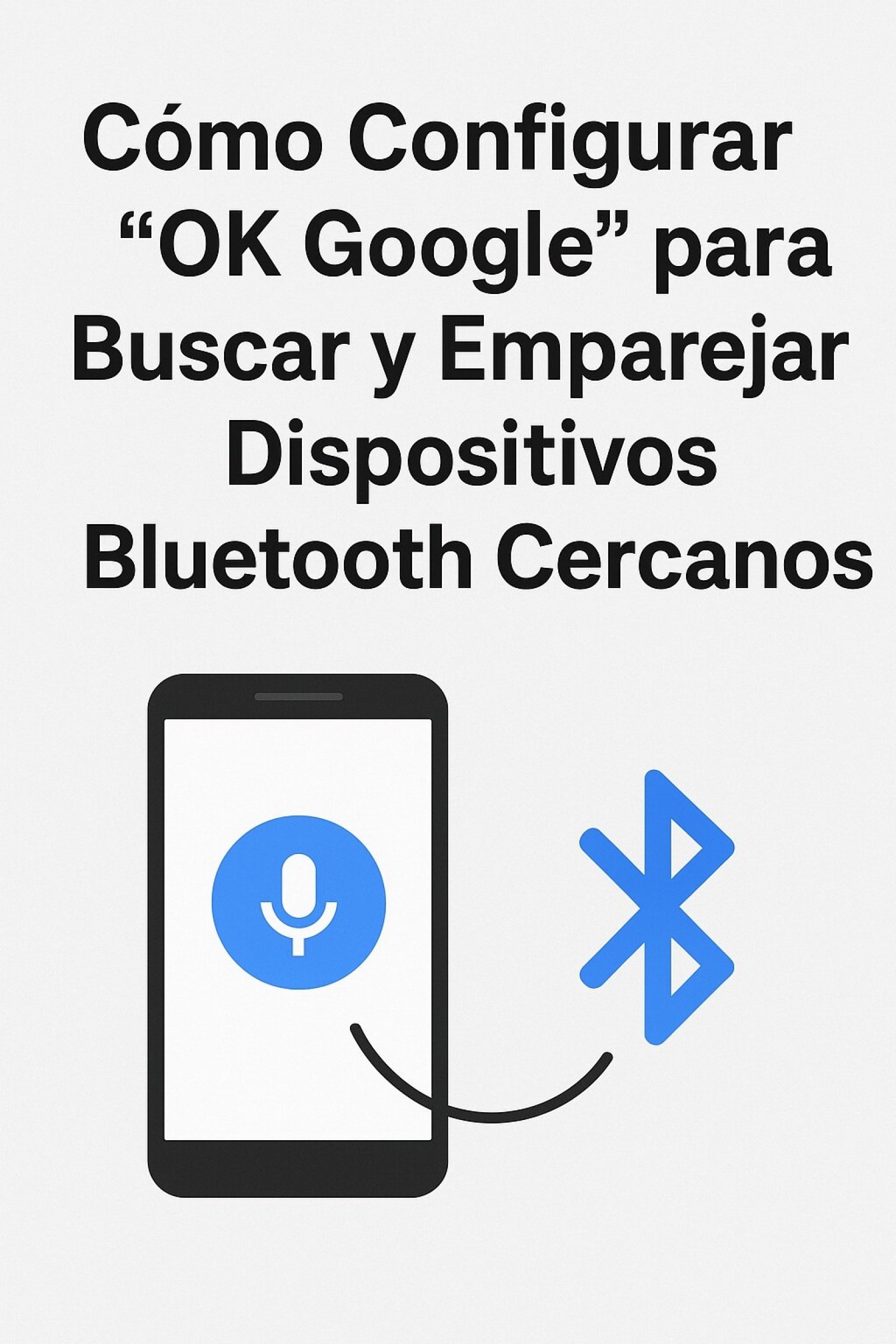
Basic activation: You need an Android device (usually version 5.0 or higher and at least 1 GB of RAM) and the updated Google app. Go to the Google app > Your profile > Settings > Google Assistant. Inside “Assistant,” look for “Hey Google” and Voice Match. Turn on “Hey Google”.
Here comes the most useful part: follow the steps to set up Voice Match. The assistant will ask you to say “Ok Google” a few times to learn your voice. This makes it recognize you better and, if you enable it, it can respond even with the screen locked.
Ways to activate it afterward:
- Say “Ok Google” or “Hey Google” out loud.
- Hold down the home button (on many Android devices).
- Swipe from a corner of the screen (depends on the model).
Common problems: If it does not respond, check these points: 1) That battery saver mode is turned off (it sometimes blocks it). 2) That the voice model is properly set up. You can delete it and recreate it in “Hey Google and Voice Match” > Voice model. 3) That you have “Access with Voice Match” and microphone permissions enabled.
Exceptions: On some phones with heavy customization layers (such as certain older Xiaomi or Samsung models), the manufacturer may limit background operation. On iPhones, you must use the Google Assistant app and it does not work with the screen locked as it does on Android.
? Share with Nearby Devices (Nearby Share)
This Android feature is the equivalent of Apple’s AirDrop, for sharing files, photos, or links with other nearby Android devices without using external apps.
Enable and configure: Go to Settings > Google > Devices and sharing > Nearby Share. Turn it on. It is critical to configure visibility:
- Everyone: Anyone nearby can send you something. Useful in public places, but it is better to use the temporary option.
- Contacts: Only your contacts will see you. The most balanced option.
- Hidden: No one sees you. Use it by default and turn it on only when you need to receive.
To share: Select any file, tap Share and choose “Share with Nearby”. It will search for nearby devices (they must have the feature active and visible). The recipient will see an alert with a verification code to confirm.
Technical detail: It uses Bluetooth to discover devices and can then transfer via Wi-Fi Direct for greater speed, without using mobile data.
Exceptions and failures: It is slower and more inconsistent than AirDrop. If it does not find the other device, make sure both have Bluetooth and location turned on (yes, location again), and that they are less than one meter apart at first. Sometimes, restarting Bluetooth on both devices fixes the problem. Also check that visibility is not set to “Hidden”. In environments with a lot of Wi-Fi or interference, it may fail.