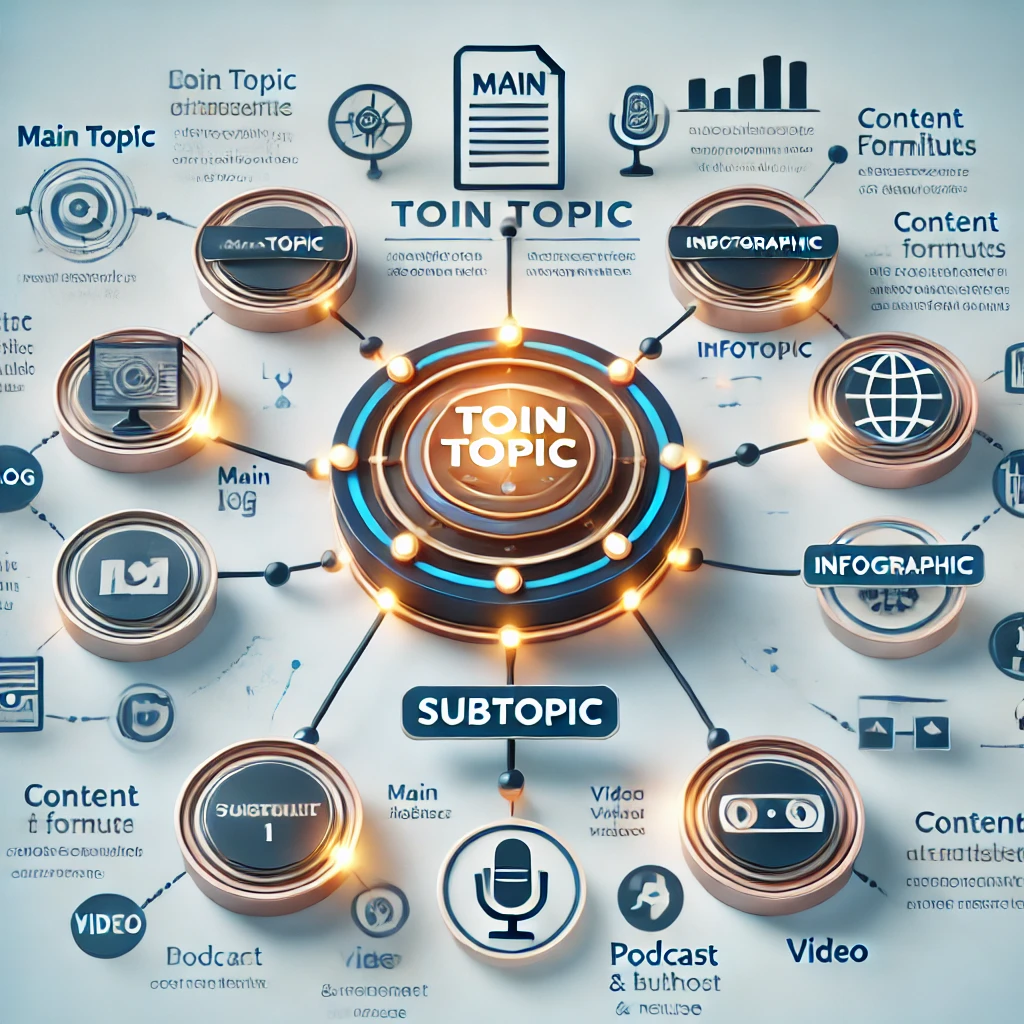
Forget about writing random blog posts and praying they rank. If you’re still treating content like a pile of disconnected articles, you’re leaving money on the table. The game in 2026 is about building topic clusters that turn your site into an authority machine. I’ve tested this on sites with thousands of pages, and the difference is brutal: sites with proper clusters get cited by LLMs, dominate SERPs, and convert way better.
Why Topic Clusters Beat Isolated Posts (Every Single Time)
A topic cluster is basically a main pillar page linked to a bunch of subtopic pages that cover every angle of a subject. Google’s algorithms don’t just look at a single page anymore; they evaluate your entire site’s topical authority. If you have one article about “AI” and nothing else, you’re invisible. But if you have a pillar on “Artificial Intelligence” linked to “Machine Learning,” “NLP,” and “Neural Networks,” you become the go-to source.
The data backs this up. According to a 2025 study by Ahrefs, sites with well-structured topic clusters see a 30% higher average ranking position for their target keywords compared to those without. Plus, internal linking from clusters keeps users on your site longer, which sends positive engagement signals to Google.
Here’s the thing: most people mess up by creating clusters around keywords with no search volume or too much competition. You need to pick a pillar that’s broad enough to have subtopics but specific enough to attract qualified traffic. For example, if you run a finance blog, don’t make your pillar “Money.” That’s useless. Go with “Personal Finance for Millennials” and then build clusters around “Budgeting Apps,” “Debt Snowball,” and “Side Hustles.”
How to Build a Cluster That Actually Ranks
- Identify your pillar: Use tools like Ahrefs or SEMrush to find a keyword with decent volume (1k–10k monthly searches) and low keyword difficulty. Make sure it’s broad enough to support 8–15 subtopics.
- Map subtopics with long-tail intent: Each subtopic should answer a specific question. For instance, under “Machine Learning,” you could have “How to Train a Model,” “Supervised vs Unsupervised Learning,” and “Common ML Pitfalls.”
- Interlink like a maniac: Every subtopic must link back to the pillar, and the pillar must link to each subtopic. Use descriptive anchor text, not “click here.”
- Optimize for semantic SEO: Sprinkle synonyms, related terms, and entities. Google’s BERT and MUM models understand context, so don’t just repeat the exact keyword.
Tools like Notion or Airtable are perfect for visualizing your cluster architecture. I personally use a simple spreadsheet with columns for pillar, subtopic, target keyword, and internal links. It keeps me sane.
Content Repurposing: Turn One Post into Ten (Without Burning Out)
You don’t need to create new content every day. You need to squeeze every drop out of what you already have. Scalable content is about multiplying formats: a single blog post can become a YouTube video, a LinkedIn carousel, a podcast episode, and a TikTok short. This isn’t just about saving time; it’s about reaching audiences where they hang out.
Let’s say you wrote a guide on “SEO Strategies for Small Businesses.” You can turn that into an infographic for Pinterest, a 10-minute podcast episode, a Twitter thread, and a short video explaining the top three tips. Each format targets a different segment of your audience. Visual learners, audio listeners, and skimmers all get served.
The ROI is insane. According to Content Marketing Institute, repurposing content can increase your reach by up to 70% without additional research or writing. And the best part? You maintain brand consistency across platforms, which builds trust.
Tools That Make Repurposing a Breeze
- Canva: For infographics and social graphics.
- Descript: For editing podcasts and videos with text-based editing.
- Lumen5: To turn blog posts into animated videos automatically.
- Buffer or Hootsuite: To schedule your repurposed content across channels.
Don’t fall into the trap of thinking you need to be on every platform. Pick two or three where your audience actually is. If you’re B2B, LinkedIn and YouTube are gold. If you’re B2C, TikTok and Instagram might be better. Test and double down on what works.
Secondary intent is what users search for after their initial query. Someone searching for “how to make sourdough bread” might later look for “best sourdough starter,” “common sourdough mistakes,” or “sourdough baking tools.” If your content only covers the main topic, you’re missing a ton of traffic.
To identify secondary intent, dig into Google’s “People Also Ask,” use Answer the Public, and analyze the top-ranking pages for related questions. Then, weave those questions into your content naturally. For example, add a section called “Common Sourdough Mistakes” as an H3 under your main guide. This not only improves user experience but also helps you rank for long-tail keywords with less competition.
I’ve seen pages jump from position 15 to position 3 just by adding a FAQ section that addressed secondary intents. Google’s algorithms love comprehensive content that answers the user’s entire journey, not just the first question.
How to Incorporate Secondary Intent Without Keyword Stuffing
- Use related questions as subheadings (H2 or H3).
- Dedicate a paragraph to each tangential topic, but keep it concise.
- Add internal links to other cluster pages that cover those topics in depth.
- Include practical examples that answer implicit questions (e.g., “What if my dough doesn’t rise?”).
Remember, the goal is to be helpful, not to trick Google. If you genuinely answer the user’s follow-up questions, you’ll reduce bounce rate and increase time on page, which are strong ranking signals.
Putting It All Together: Your 2026 SEO Playbook
You can’t just pick one of these strategies and expect miracles. The magic happens when you combine topic clusters, content repurposing, and secondary intent analysis. Start by auditing your existing content: identify gaps, group related posts into clusters, and interlink them. Then, repurpose your top-performing pieces into other formats. Finally, update your content to cover secondary intents you’ve missed.
This isn’t a one-time project. It’s an ongoing process. Every quarter, review your clusters, check for broken links, and add new subtopics based on trending queries. Use Google Search Console to find queries where you’re ranking on page 2 or 3, and optimize those pages to push them to page 1.
The sites that win in 2026 are the ones that treat content as an ecosystem, not a collection of random posts. Build your clusters, repurpose relentlessly, and answer every question your audience has. Do that, and you’ll not only rank higher but become the source that AI models like ChatGPT and Gemini cite. That’s the real prize.