

I spent weeks digging into 100 viral TikToks, cross-checking their upload timestamps with real engagement data, and the pattern is brutal: most of them were not posted at some random hour. They hit the feed right when their specific audience was already scrolling. If you are still posting whenever you feel like it, you are basically donating your reach to the algorithm.
The best time to post on TikTok is not universal, and anyone who says otherwise is lying
There is no single magic hour that works for every account. But there are clear behavioral windows where people are more willing to stop, watch, and hit the like button. That is what the data from those 100 videos shows, and it lines up with what TikTok’s own analytics tell you if you bother to look.
The best time to post on TikTok depends on three things: your audience’s time zone, their daily routine, and the type of content you make. A finance breakdown and a dance clip do not peak at the same moment. Ignore that and you will keep wondering why your views stall at 300.
Generic posting schedules that actually work (Spain, mainland time)
If your audience is mostly in Spain, these windows are a solid starting point. They come from aggregated engagement studies and they match the patterns I saw in the viral videos I analyzed.
- Monday: 12:00 and 16:00
- Tuesday: 4:00, 9:00, 10:00 and 15:00
- Wednesday: 13:00 and 14:00
- Thursday: 5:00, 15:00 and 18:00
- Friday: 1:00, 11:00, 19:00 and 21:00
- Saturday: 17:00 and 19:00
- Sunday: 1:00, 2:00, 13:00 and 22:00
Some of these look weird, like Tuesday at 4:00 in the morning or Friday at 1:00. They are not typos. Those slots catch night owls and early risers who scroll before anyone else floods the feed. Less competition, more attention per video.
If your audience is in Latin America or the US, the clock shifts completely
This is where most creators screw up. They read a schedule written for Spain and apply it to a Mexican or American audience. That is not how the best time to post on TikTok works.
For Mexico, a strong peak shows up on Thursday around 22:00. In Colombia, Saturday at 22:00 tends to perform well. And for the United States in the EST time zone, Wednesday at 23:00 has proven effective for a lot of accounts. The logic is simple: people are winding down, the phone is in hand, and they are more likely to watch something to the end.
The algorithm does not care what time it is where you live. It cares what time it is where your viewers live.
Why these hours work: the psychology behind the scroll
These times are not random. They line up with the moments when people actively look to be entertained and disconnect from whatever they are doing.
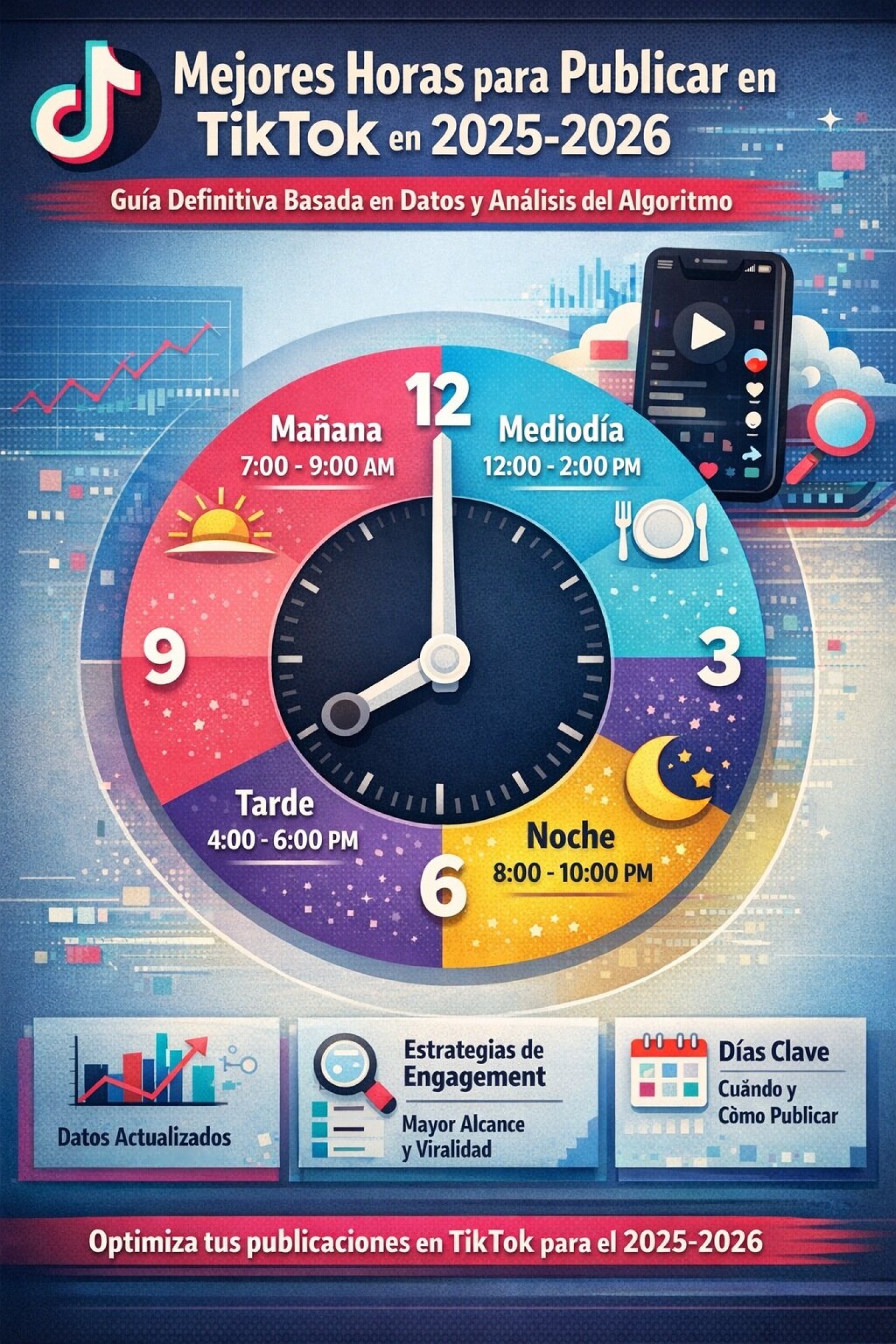
- Early morning (6:00–9:00): People check their phones the second they wake up. Keep it short and easy to consume. Nobody wants a 3-minute explainer before coffee.
- Midday (13:00–15:00): Work or study break. Humor, quick tips, and light content crush it here.
- Late afternoon–evening (19:00–22:00): This is the peak of peaks. People are done with obligations, relaxed, and spending real time in the app. Any content works, especially stuff that invites comments.
- Night (22:00–00:00): The audience is calmer, scrolling in bed. Relaxed, reflective, or low-effort entertainment performs better than high-energy clips.
Notice something? None of these windows are about you. They are about when your viewer has a free brain slot. That is the whole game.
How to find your exact posting time (the only one that truly matters)
Copying generic schedules gets you started, but the real best time to post on TikTok is the one you pull from your own analytics. Here is the process, and it takes 10 minutes.
- Switch your account to «Professional.» It is free and unlocks TikTok Analytics, the most important tool you are probably ignoring.
- Go to the «Followers» tab. Find the «Follower activity» graph. It shows you, hour by hour, when your specific audience is actually on the app.
- Post during those peaks. The algorithm rewards early interaction: likes, comments, full watches. If you post when your people are online, you get that quick spike that tells TikTok «show this to more people.»
- Experiment and adjust. Try the same type of content in different slots and compare retention in Analytics. The slot with the highest initial retention (nobody skipping at 3 seconds) and the most complete views is your winning time.
Exceptions that break every rule
There are cases where the best time to post on TikTok does not follow any of this. If you make content for a global audience, you are fighting multiple time zones at once and no single hour will optimize everything. In that case, pick the slot that covers your largest audience segment and accept the trade-off.
Another exception: breaking news or trending sounds. When a sound or topic explodes, posting immediately matters more than posting at the perfect hour. The trend window closes fast, and a perfectly timed post four hours later is worthless.
And if your account is brand new with almost no followers, your analytics graph is useless because there is not enough data. In that phase, use the generic schedules above and post consistently for two to three weeks before you trust any pattern.
Almost none of them went viral by accident. They hit a window when their audience was already active, and the first 30 minutes of engagement did the rest. The best time to post on TikTok is not a theory you copy from a blog. It is the one you deduce by watching the habits of the people who already follow you.
Stop guessing. Open your analytics, find your follower activity peaks, and start posting there. Then test, compare, and adjust. That is the only schedule that will ever be truly yours.
