Let’s be blunt: nobody cares about your fancy logo if your website looks like it was built in 2009. In 2026, the first impression of your business happens on a screen, not in your storefront. And that impression lasts about three seconds before someone bounces to your competitor.
I’ve seen local businesses with great products lose customers to worse competitors just because the other guy had a professional website that loaded fast and looked legit. That’s it. That’s the whole game.
Your Website Is Your Digital Handshake (And People Judge Hard)
Think about how you shop. You Google something, click a link, and within seconds you decide if this place is real or a scam. Same thing happens to your business. A professional website design isn’t about looking pretty — it’s about signaling “we’re serious, we’re not going anywhere, you can trust us.”
According to Stanford’s Web Credibility Research, roughly 75% of users admit they judge a company’s credibility based on its website design alone. That’s not a minor stat. That’s your entire sales funnel resting on how your homepage looks.
If your site looks amateur, cluttered, or slow, people assume your service is amateur and slow too. Unfair? Sure. But it’s how humans work.
Mobile-First Is Not Optional Anymore — It’s the Default
Google has been indexing mobile versions of sites first since 2019, and by 2026 it’s basically the only thing that matters for rankings. If your site looks broken on a phone, you’re invisible in search results.
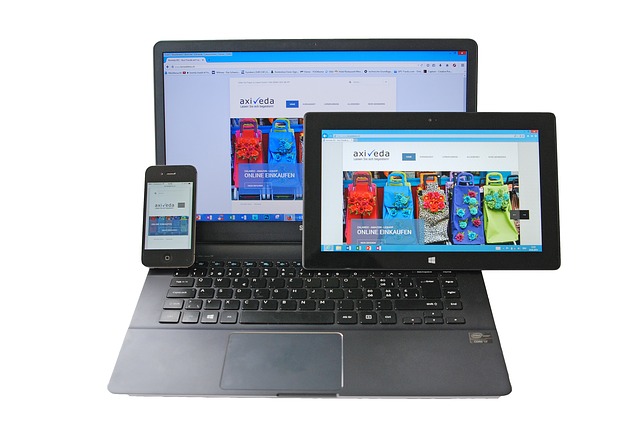
A proper responsive web design is the difference between a customer tapping “call now” and a customer tapping your competitor’s link. More than 60% of all web traffic globally comes from mobile devices — in some industries it’s over 75%.
Here’s my honest take: if you’re still asking “do I really need a mobile-friendly site?”, you’ve already lost. That question was answered years ago.
What a Real Professional Website Actually Does for Your Business
It’s not just a pretty brochure. A well-built site works for you 24/7. Here’s what it actually delivers:
- Trust signals: SSL certificate, real reviews, clear contact info, a physical address. These things convert strangers into buyers.
- Lead generation: Contact forms, booking systems, WhatsApp buttons. Every element has a job.
- SEO foundation: Fast loading, clean code, proper structure. Without this, Google won’t even show you.
- Brand authority: Consistent colors, typography, and messaging that makes you look like the category leader, not the rookie.
- Customer education: FAQs, service pages, pricing transparency. This cuts down pointless calls and pre-qualifies leads.
I’ve watched small businesses double their inquiries in under six months just by fixing their site structure and adding real testimonials. No ad spend. Just a professional website doing its job.
The WordPress Angle: Power Without the Headache
If you’re on WordPress — and statistically, over 43% of all websites are — you’ve got a huge advantage. You don’t need a dev team for every tweak. Plugins handle SEO, caching, security, and speed.
But here’s the catch: plugins don’t fix bad design. You can stack 30 plugins and still have an ugly, slow site. The foundation matters more than the tools.
That said, if you want to streamline your workflow, tools like the ones covered in WordPress productivity plugins can genuinely save hours. Just don’t use them as a substitute for strategy.
Linkbuilding and SEO: The Part Nobody Wants to Hear
Having a professional website is step one. Getting people to find it is step two, and that’s where most businesses fail miserably.
You can’t just publish a site and wait. Google needs signals — backlinks, content authority, technical health. If you’re serious about ranking, learning proper linkbuilding techniques isn’t optional. It’s the difference between page one and page ten.
My stance: focus on getting 10 high-quality, relevant backlinks before chasing 100 low-quality directory links. Quality beats quantity every single time. Anyone telling you otherwise is selling you junk.
Small Business, Big Business — The Rule Doesn’t Change
Whether you run a one-person consultancy or a 50-employee operation, the expectation is identical. People want to see a professional business website that answers three questions fast: What do you do? Why should I trust you? How do I contact you?
If your site makes them work to find those answers, they leave. Period.
“Your website is the only salesperson that works 24 hours a day, never takes a day off, and never complains.”
Treat it that way. Invest in it. Update it. Test it on your phone right now. If it doesn’t feel right, neither will your customers.
The businesses winning in 2026 aren’t the ones with the biggest budgets — they’re the ones who understood that a professional website is the entry ticket to being taken seriously online.